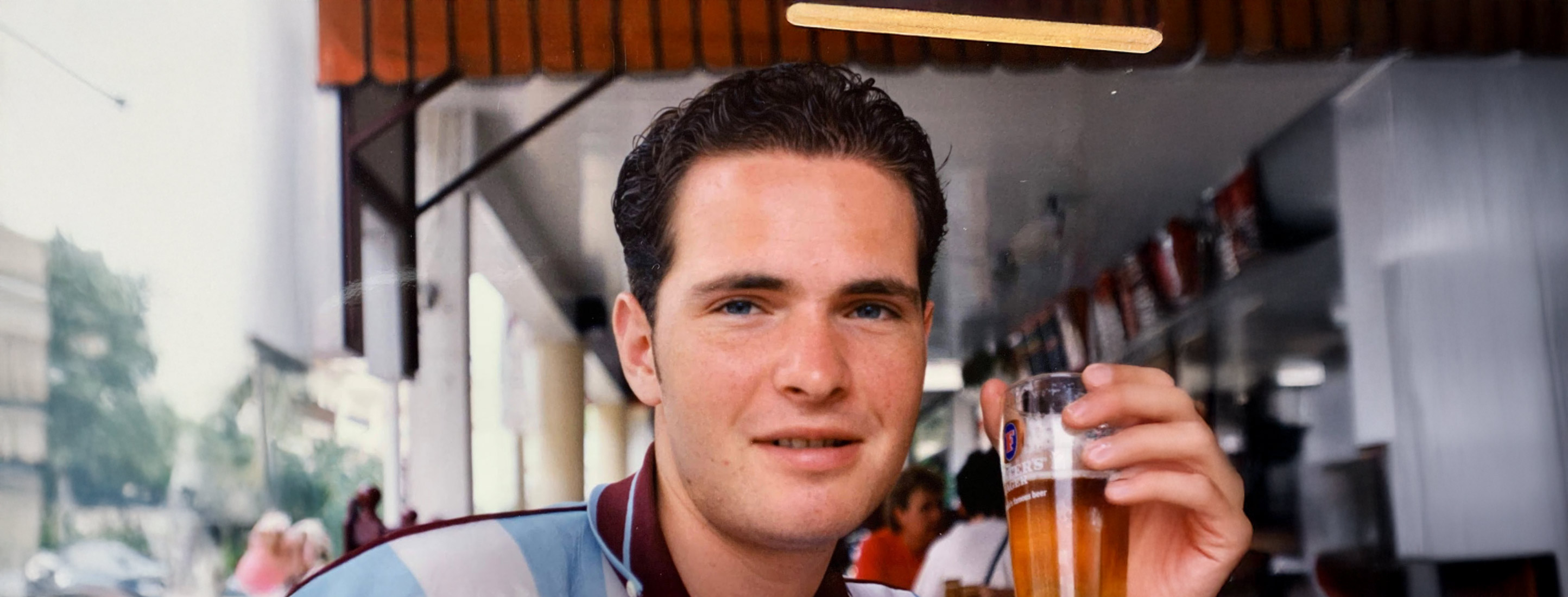
David Anderson:
My Hair Loss Story
30 years, 8 procedures, and the lessons that shaped my work.
Over the course of 30 years, I’ve experienced hair loss as a patient, a repair patient, and an advisor, undergoing eight hair transplant procedures and spending 15+ years guiding others through the same decisions. Alongside surgery, I’ve also managed hair loss medically, using finasteride for 20+ years, and adding minoxidil more recently, which has played an important role in preserving existing hair and supporting long-term planning.
Hair loss is rarely a single moment - it’s a slow, often confusing process that unfolds over years. For me, it began three decades ago, long before social media, online forums, or clear guidance existed. Since then, hair loss has been a constant presence in my life - not just personally, but professionally - shaping the decisions I made, the mistakes I learned from, and ultimately the work I do today.
That long view has given me a perspective few people have: how hair transplants age, how medical therapy fits into a broader strategy, how planning decisions compound over time, and why short-term thinking often leads to long-term problems.
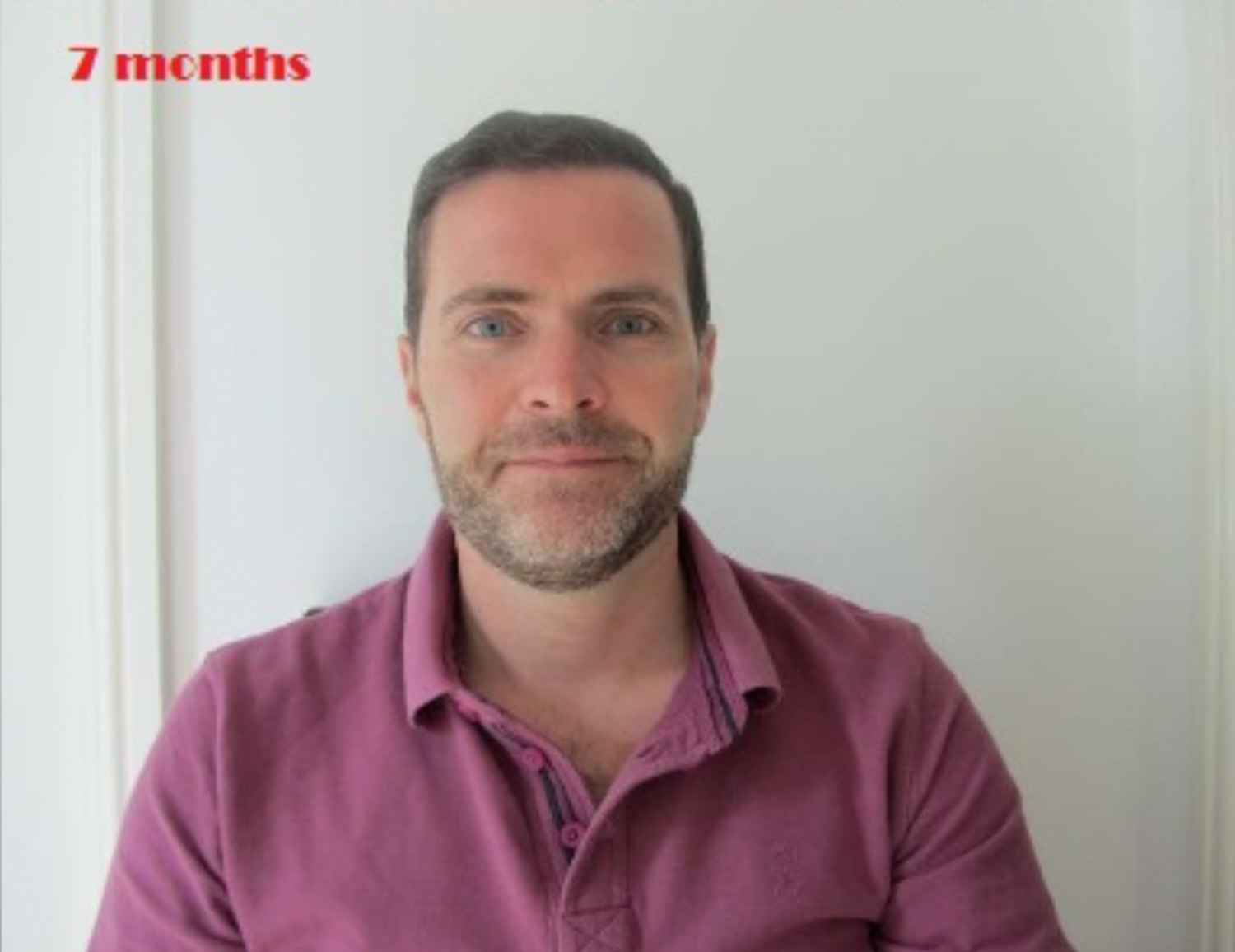
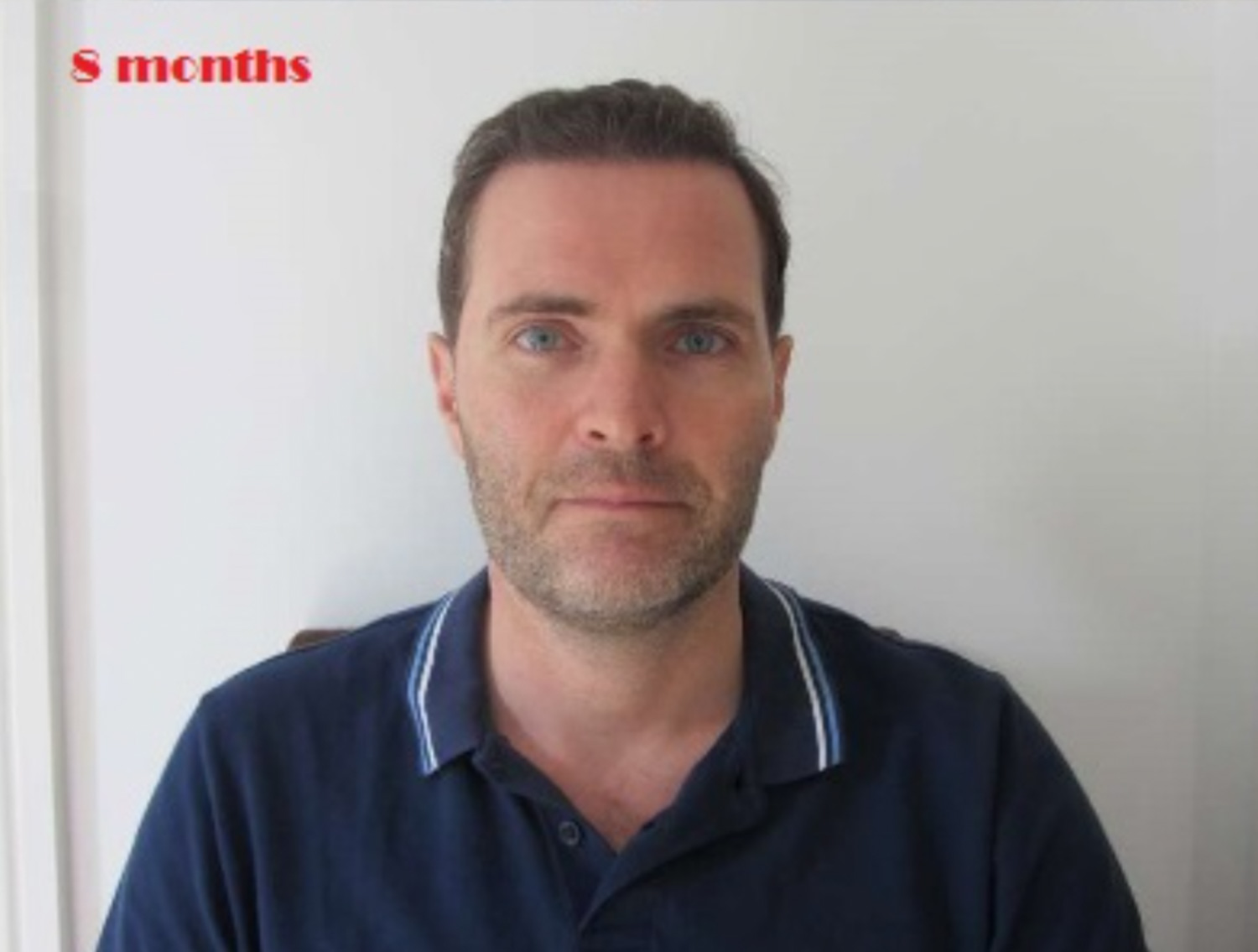
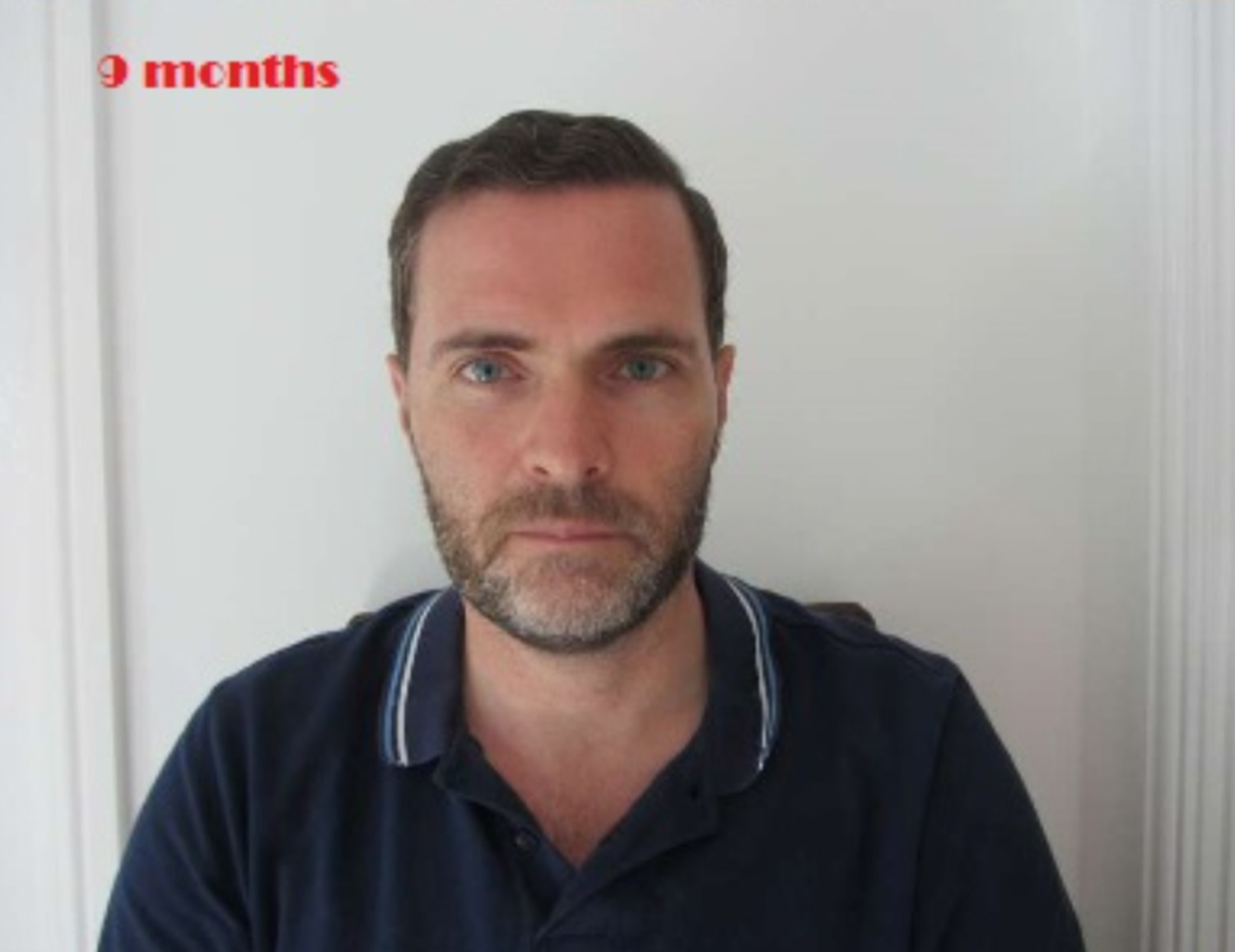
What follows is my story - not as a success highlight reel, but as a realistic account of what it’s like to live with hair loss over decades. You can read it in full, or simply explore the photographs and milestones below. Either way, my aim is the same: to give context, clarity, and honest insight for anyone trying to make sense of their own journey.
Ready to talk through your own situation?
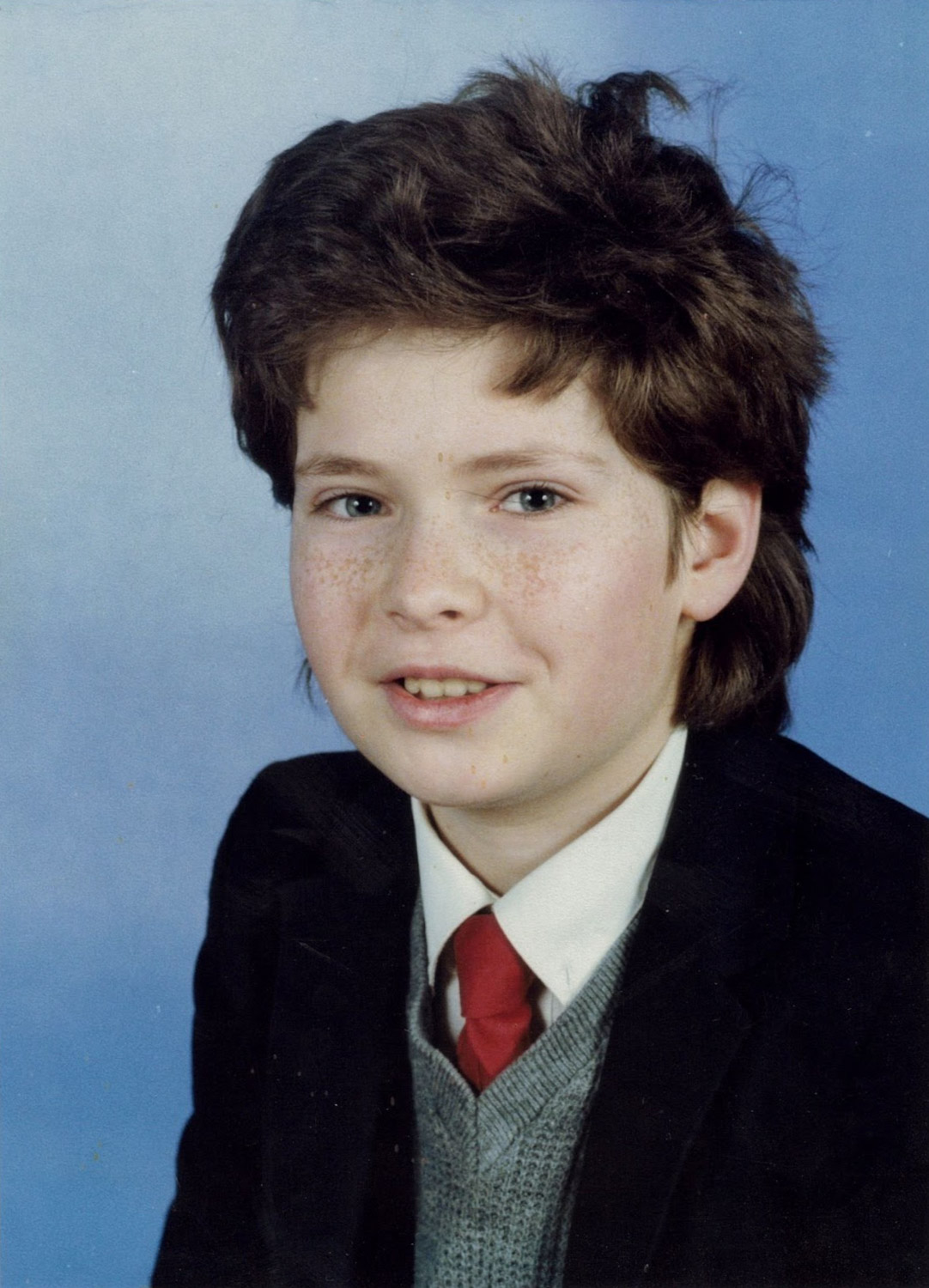
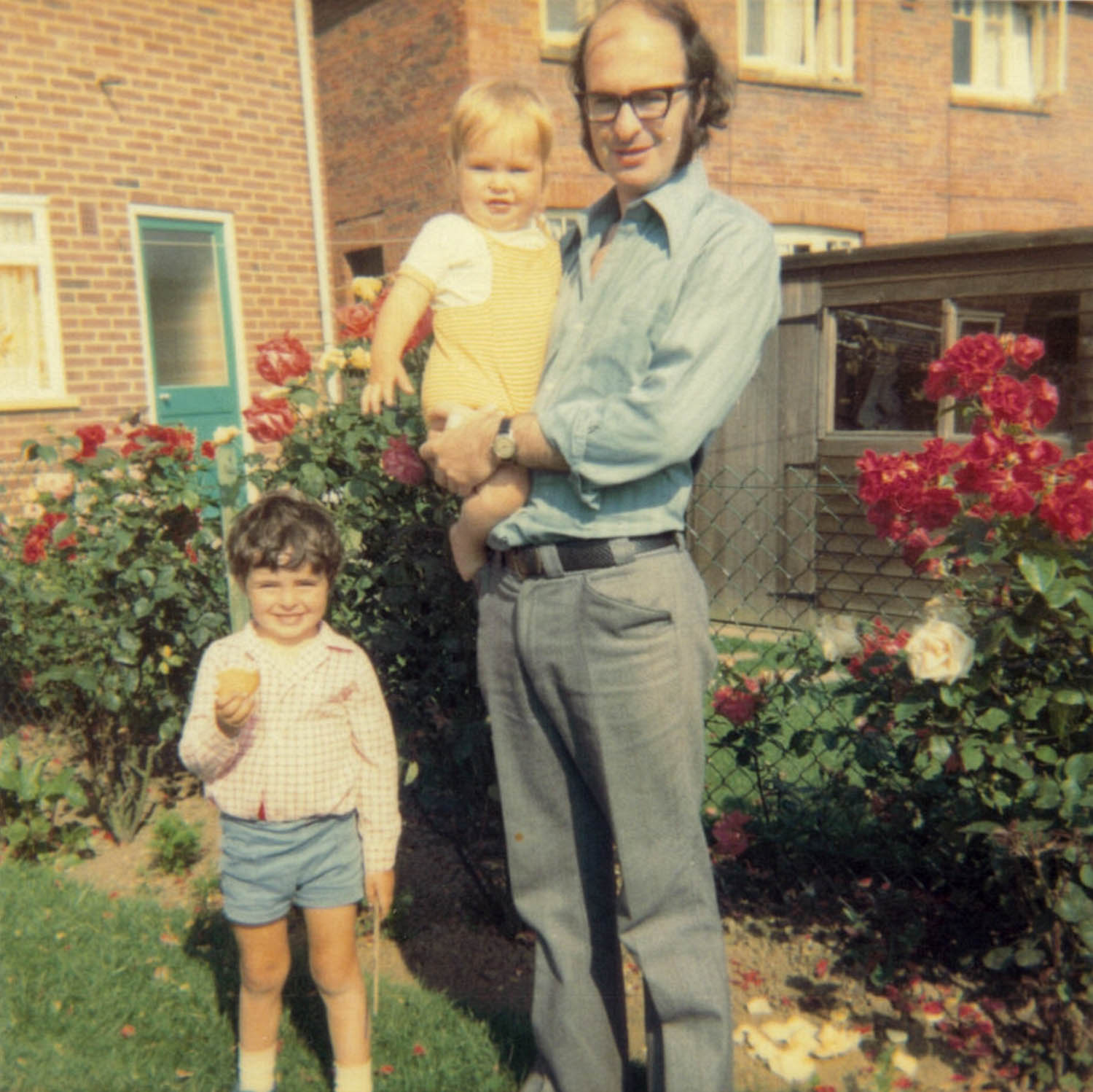
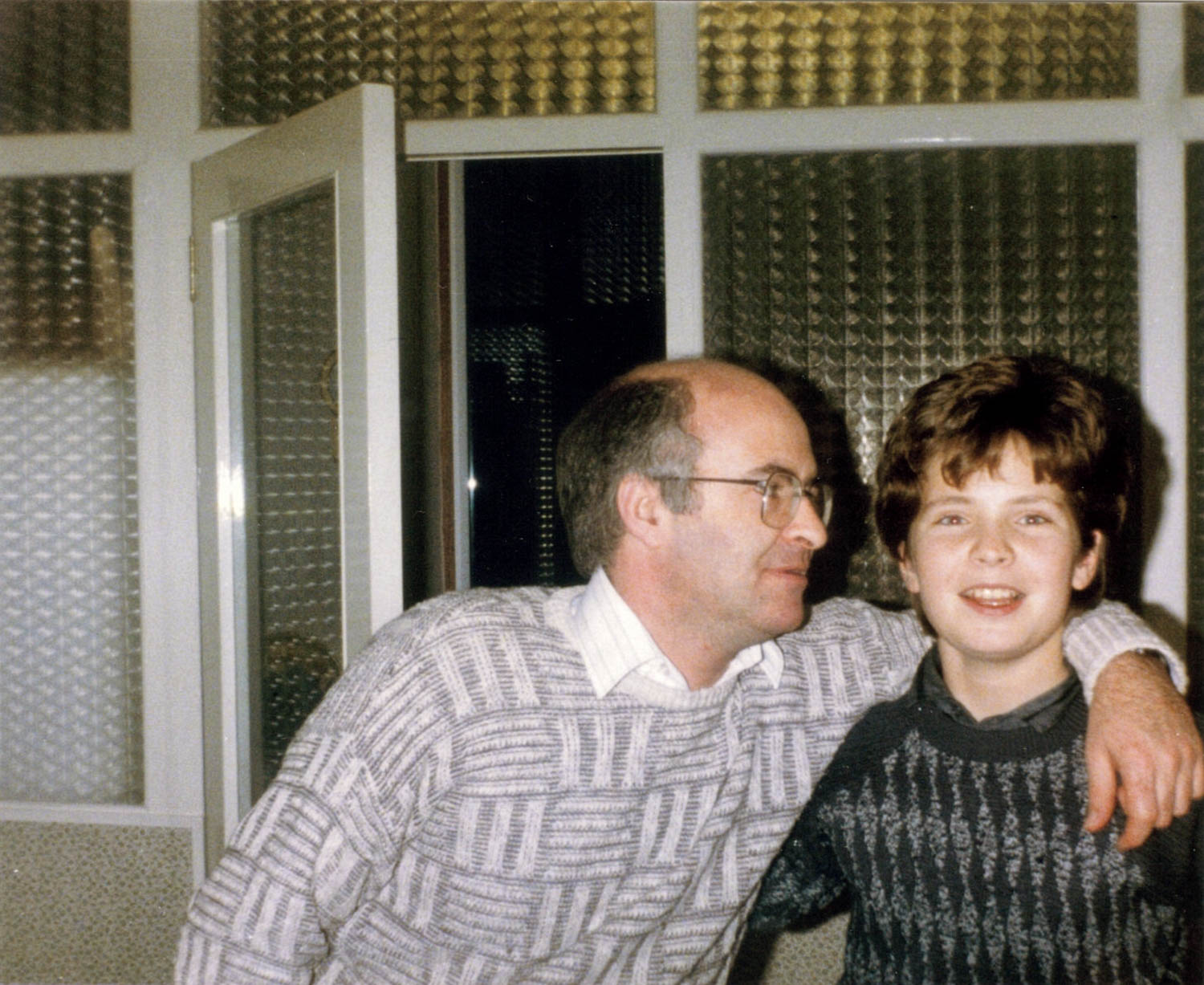
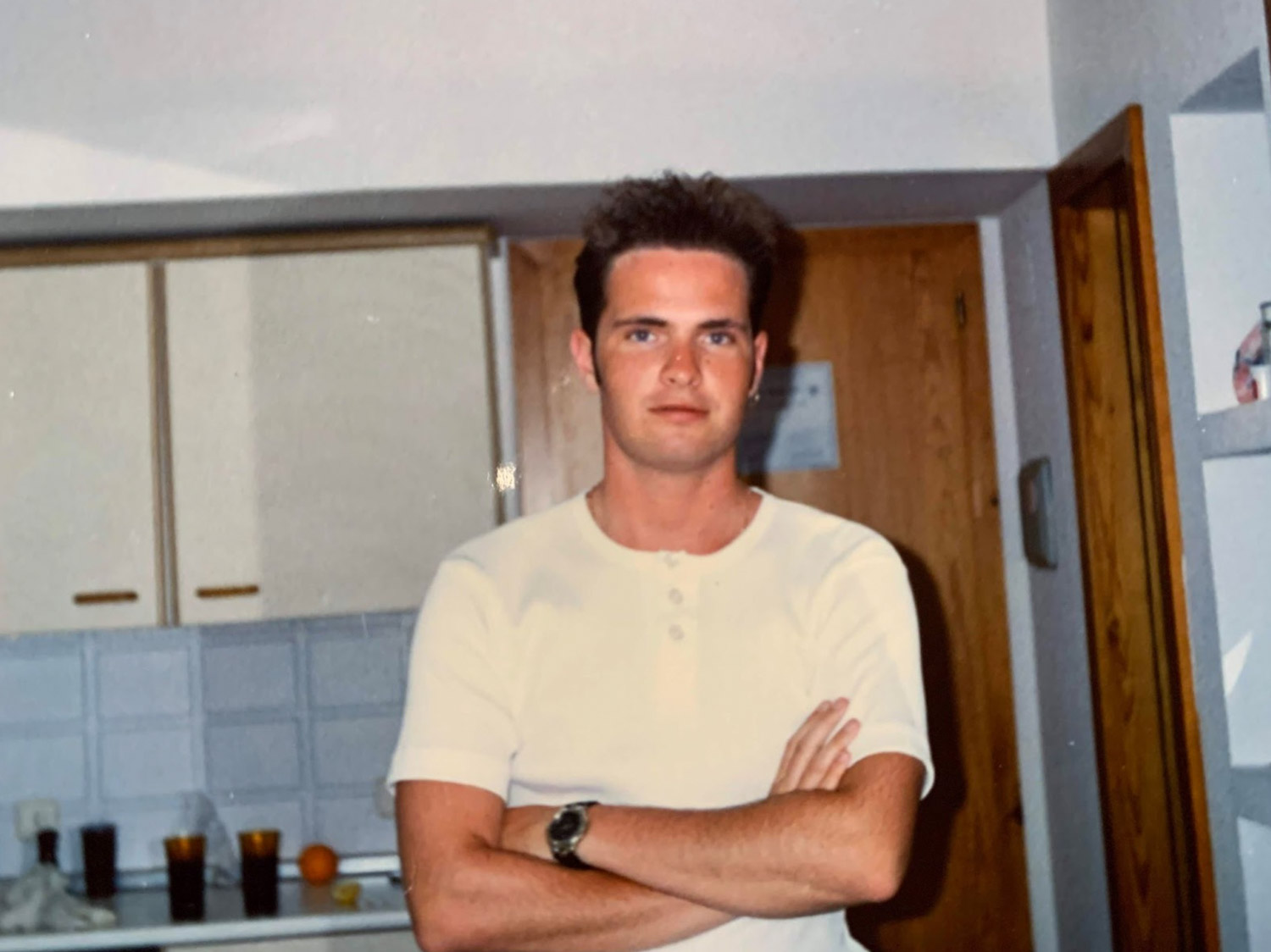
When Hair Was the Last Thing on My Mind
As a teenager, hair loss simply didn’t exist in my world. I had extremely thick, unruly hair, so dense that barbers regularly reached for thinning scissors. Family members joked about it and I hated how difficult it was to manage.
At the time, it felt like an inconvenience rather than something to appreciate. I had no awareness of genetics, no understanding of male pattern hair loss, and no reason to think my hair would ever disappear. Like most young men, I assumed it would always be there.
Genetics Catch Up
Hair loss runs strongly through my father’s side of the family. My dad lost his hair aggressively in his early twenties and was fully bald by 30. His father had been bald for as long as I could remember. On my mum’s side, hair loss was virtually non-existent. At the time, I didn’t understand how dominant genetics could be or how early aggressive loss could start. Looking back now, the pattern was obvious, and I was always likely to follow it.
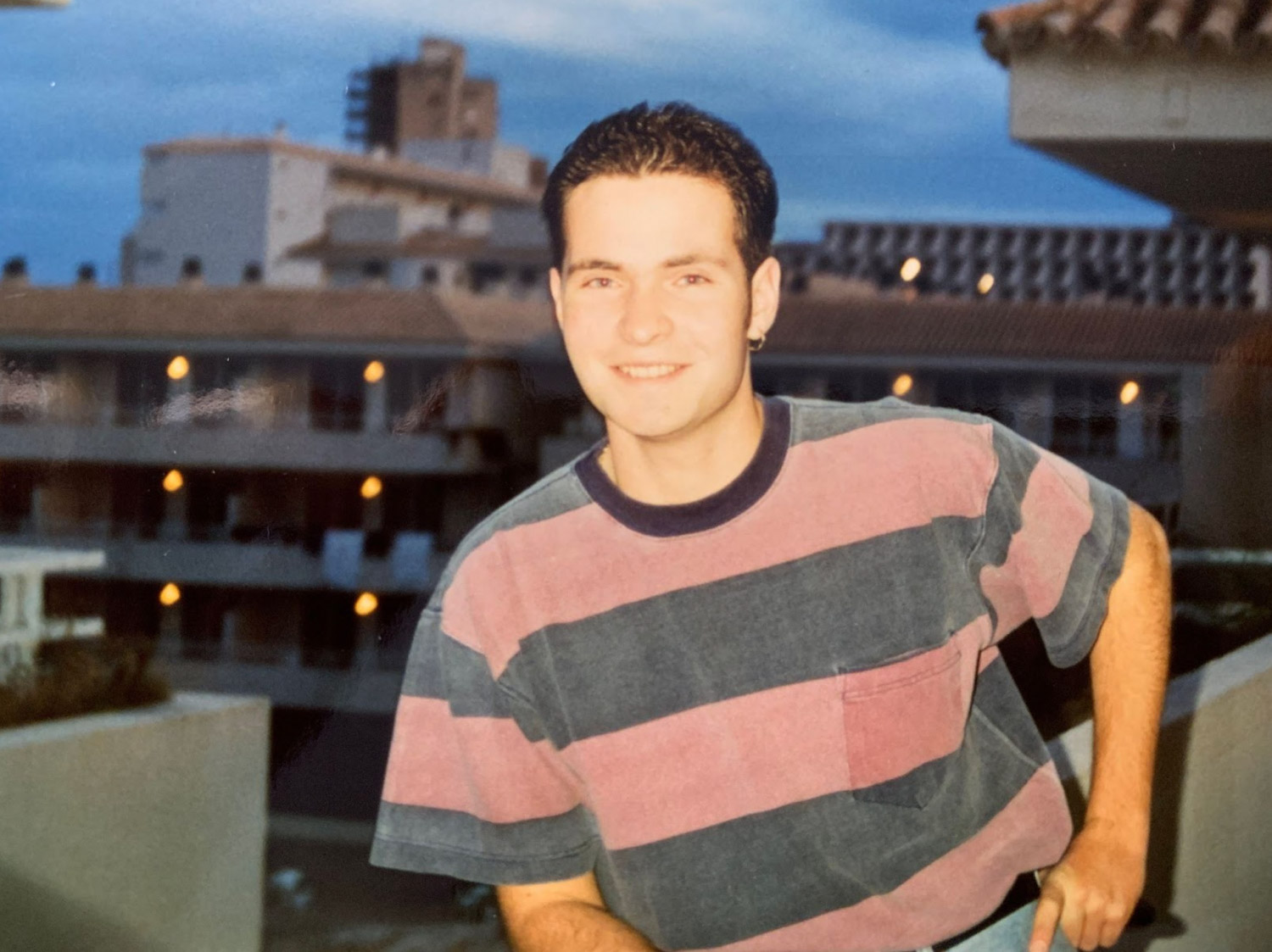
The First Signs and Losing My Dad
Around 19, I started noticing subtle changes. My quiff felt weaker, the volume wasn’t the same, but I didn’t connect the dots. Before I had time to process what was happening, my dad died suddenly from cancer at just 47. The shock was immense, and I wasn’t emotionally equipped to deal with it. I’ve always believed that the trauma accelerated my hair loss. I never got the chance to ask him how he felt about losing his hair or what advice he might have given me.
The Comment That Changed Everything
By 21, styling products were doing most of the work. I burnt my scalp sunbathing, something that had never happened before. That night, after a long day and plenty of alcohol, a girl I’d been chatting with said something I still remember decades later:
“You are losing your hair.”
It wasn’t said maliciously, but it ended my denial instantly. From that moment on, I became hyper-aware. I bought a baseball cap, studied mirrors obsessively, and felt my confidence slip away. A single comment triggered years of anxiety and self-consciousness.
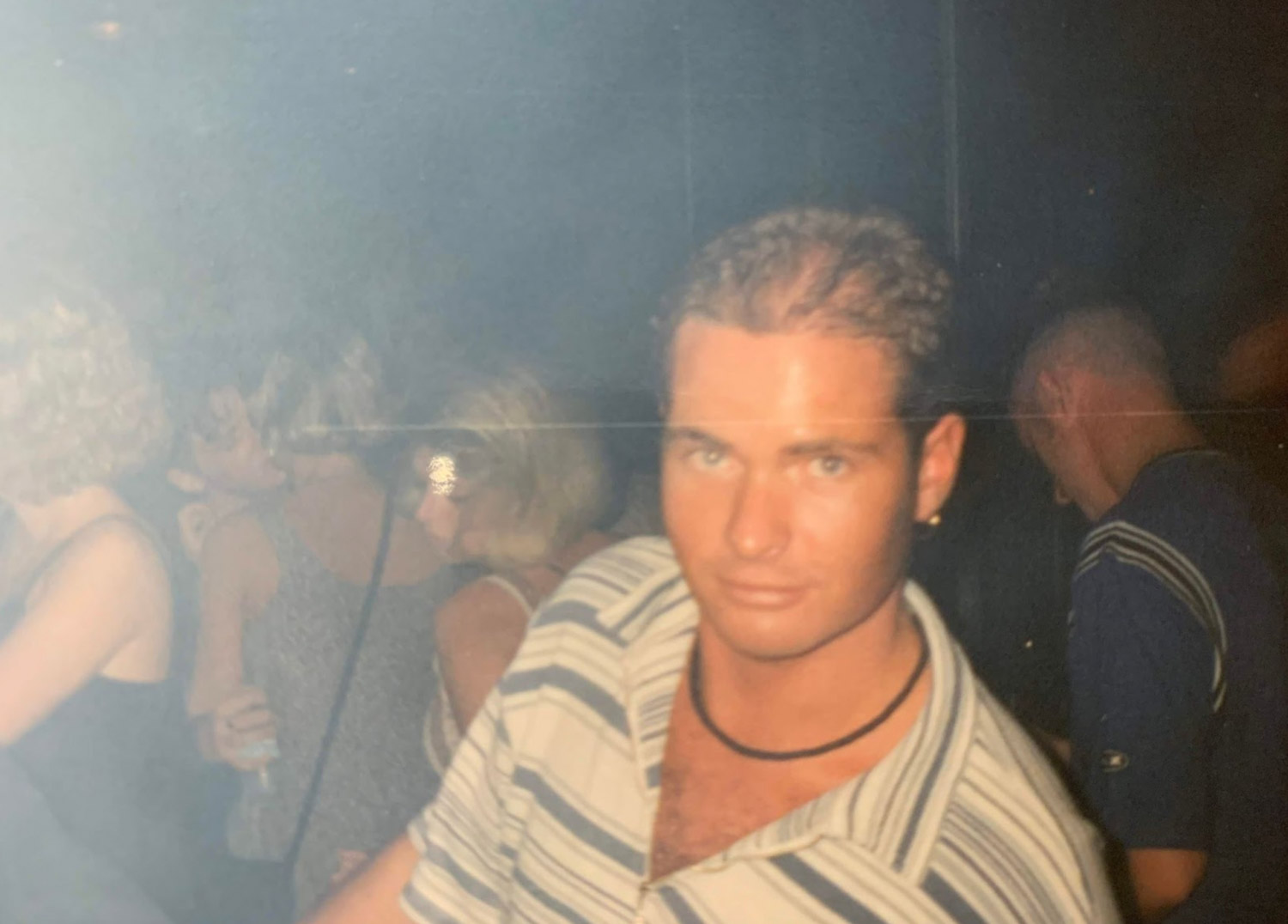
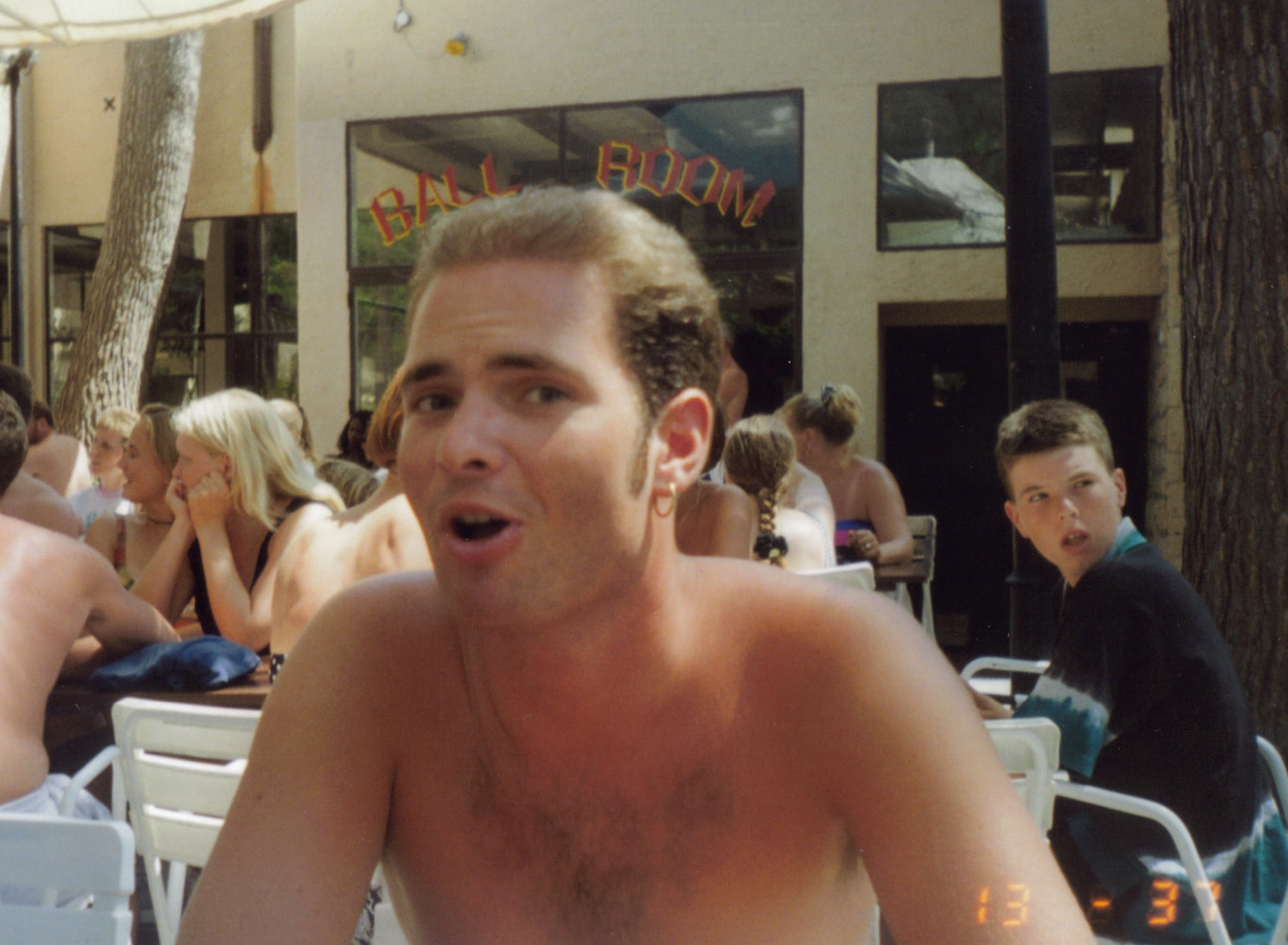
Chasing Myths, Not Medicine
Desperate for answers, I began weekly visits to a trichologist. I tried cold-water scalp treatments, tar shampoos, infrared therapy, and topical creams. Minoxidil was emerging, but finasteride was surrounded by fear and misinformation. I was told it could feminise me and destroy my sex drive, which as a 20-year-old shut the conversation down immediately. Despite time, effort, and money, my hair continued to thin. I was chasing hope without understanding stability.
“Strand by Strand”: The hair system disaster
I began seeing adverts for “Strand by Strand,” endorsed by famous cricketers and marketed as a revolutionary alternative to transplants. I was told transplants were unnatural and a waste of money. I paid a £1,000 deposit on a £2,000 package. Six weeks later, I was taken into a private room and shown the product. It was a hair system. When they started fitting it, I broke down and asked them to remove it. I lost my deposit and walked away humiliated.

Early Transplants and Compounding Mistakes
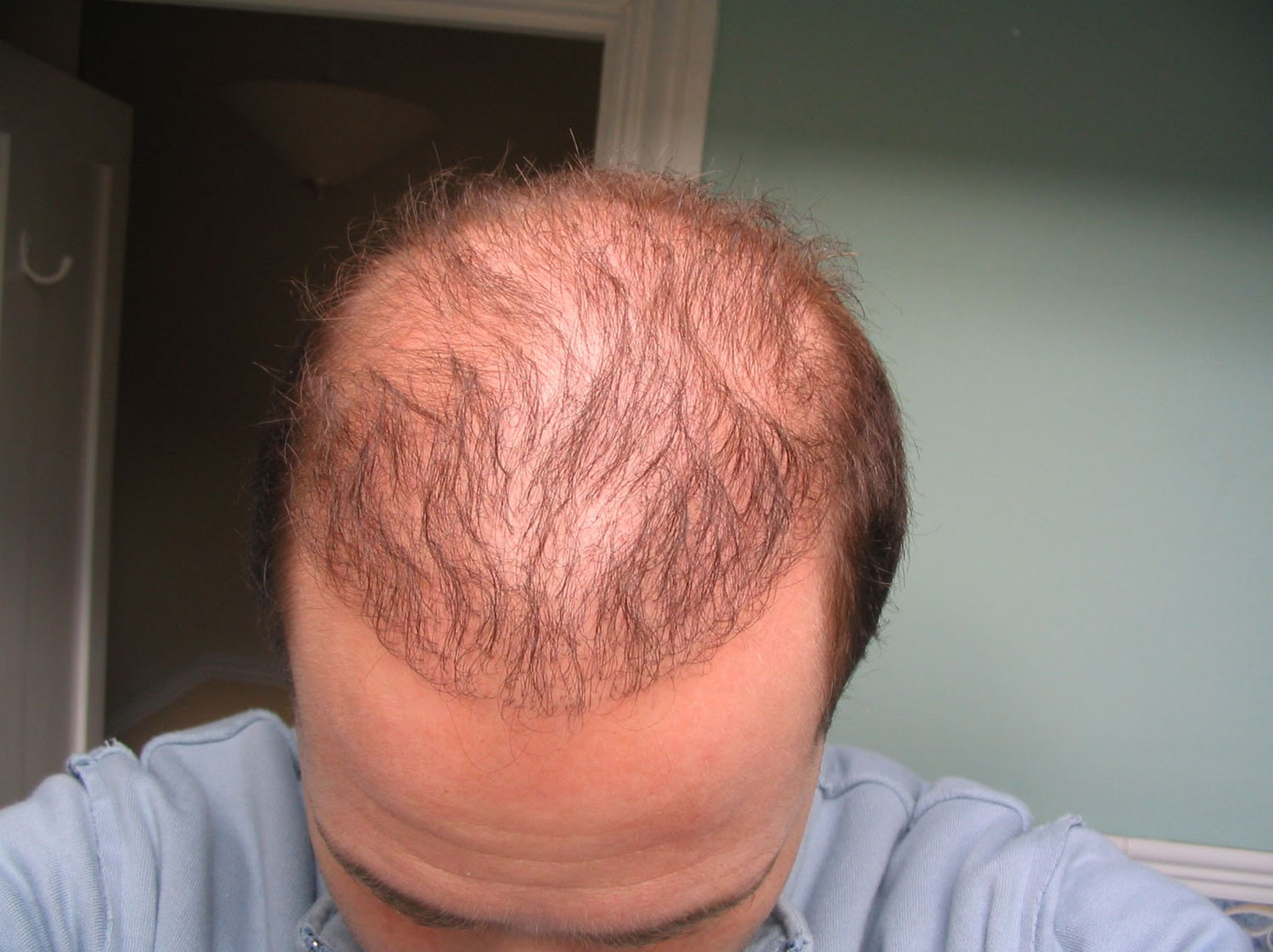
My first transplant consultation was brief and poorly planned. The hairline was drawn in about 30 seconds before the surgeon left the room.
450 grafts were spread across diffuse thinning, causing more trauma than benefit. With hindsight, medication - not surgery - should have been the starting point.
With no aftercare or guidance, I underwent two further UK procedures. One involved a poorly placed strip, leaving long-term scarring and permanent nerve damage.
By 25, I’d had three transplants, multiple scars, ongoing thinning, and no medical stability. I’d tried to fix hair loss - and only made it worse.
The Lost Years - Scars, Hats, and a Wedding
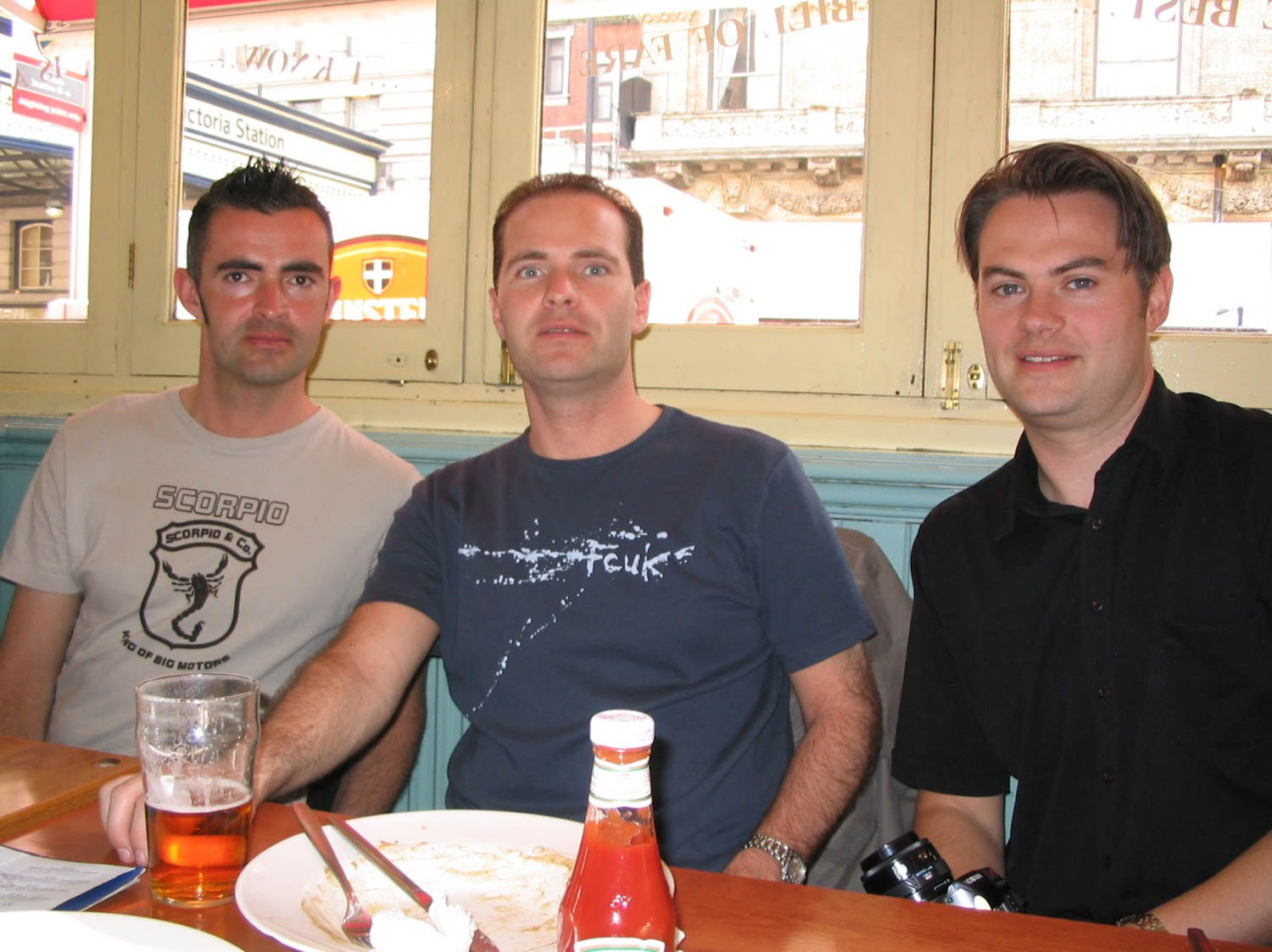
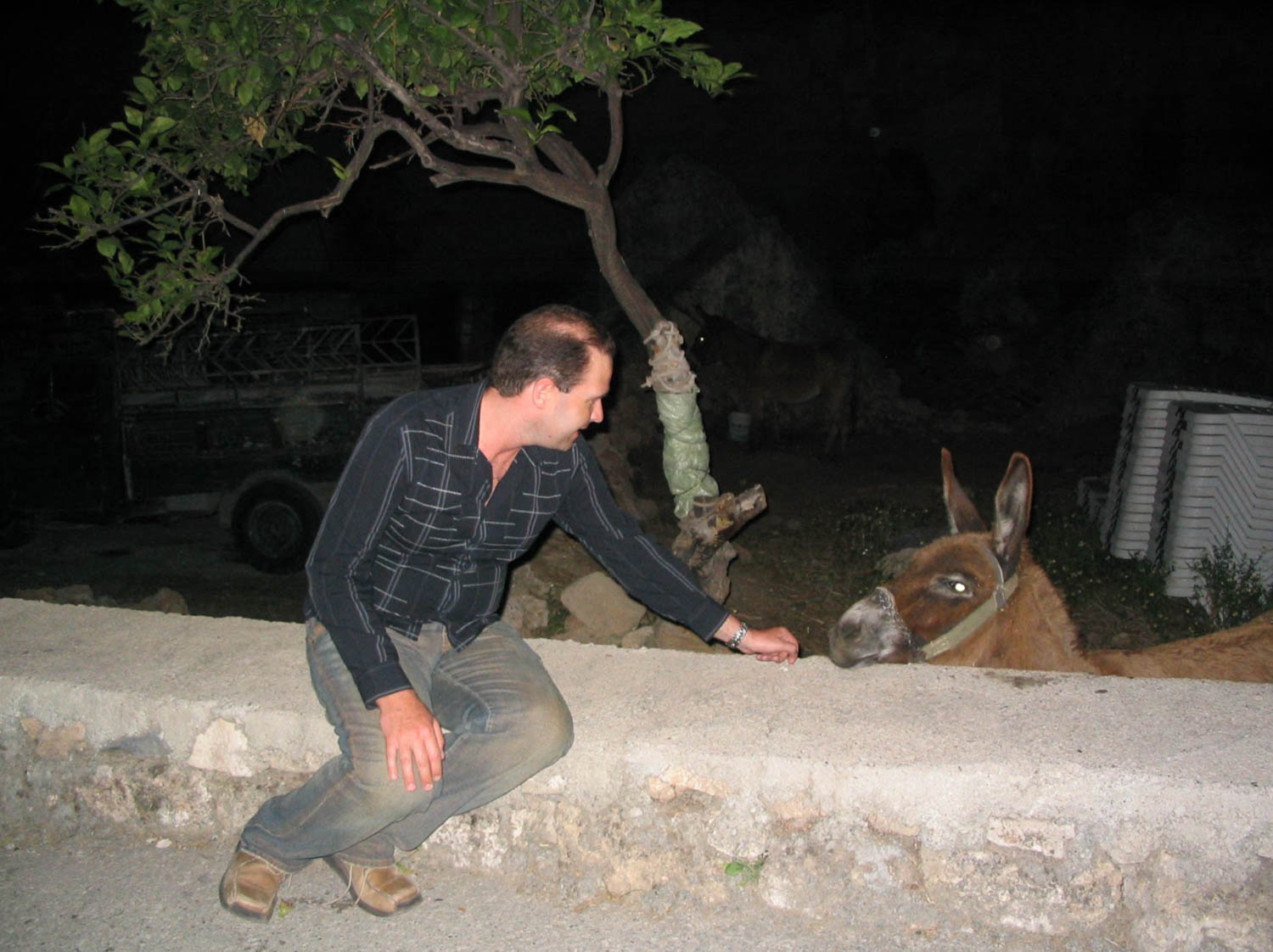
These were the hardest years. My transplanted hair continued to thin, leaving an unnatural appearance. Hats became essential. Haircuts were traumatic. I withdrew socially and avoided photographs.
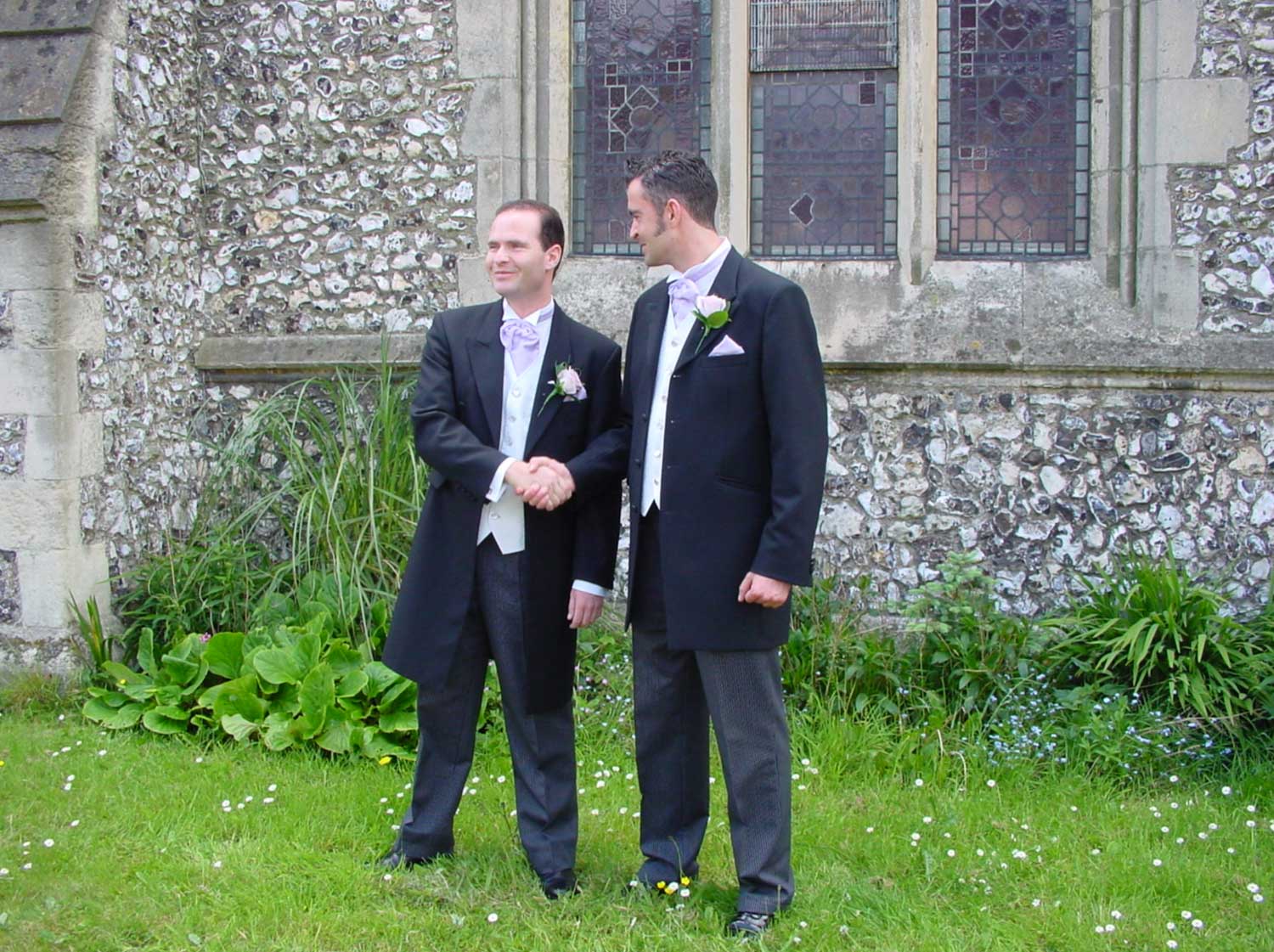
I got married in 2004, but hair loss overshadowed much of the day. I dyed my hair to hide thinning and felt deeply uncomfortable being seen. Hair loss had taken far more than hair; it had taken confidence and peace of mind.



Discovering Repair - and Real Hope
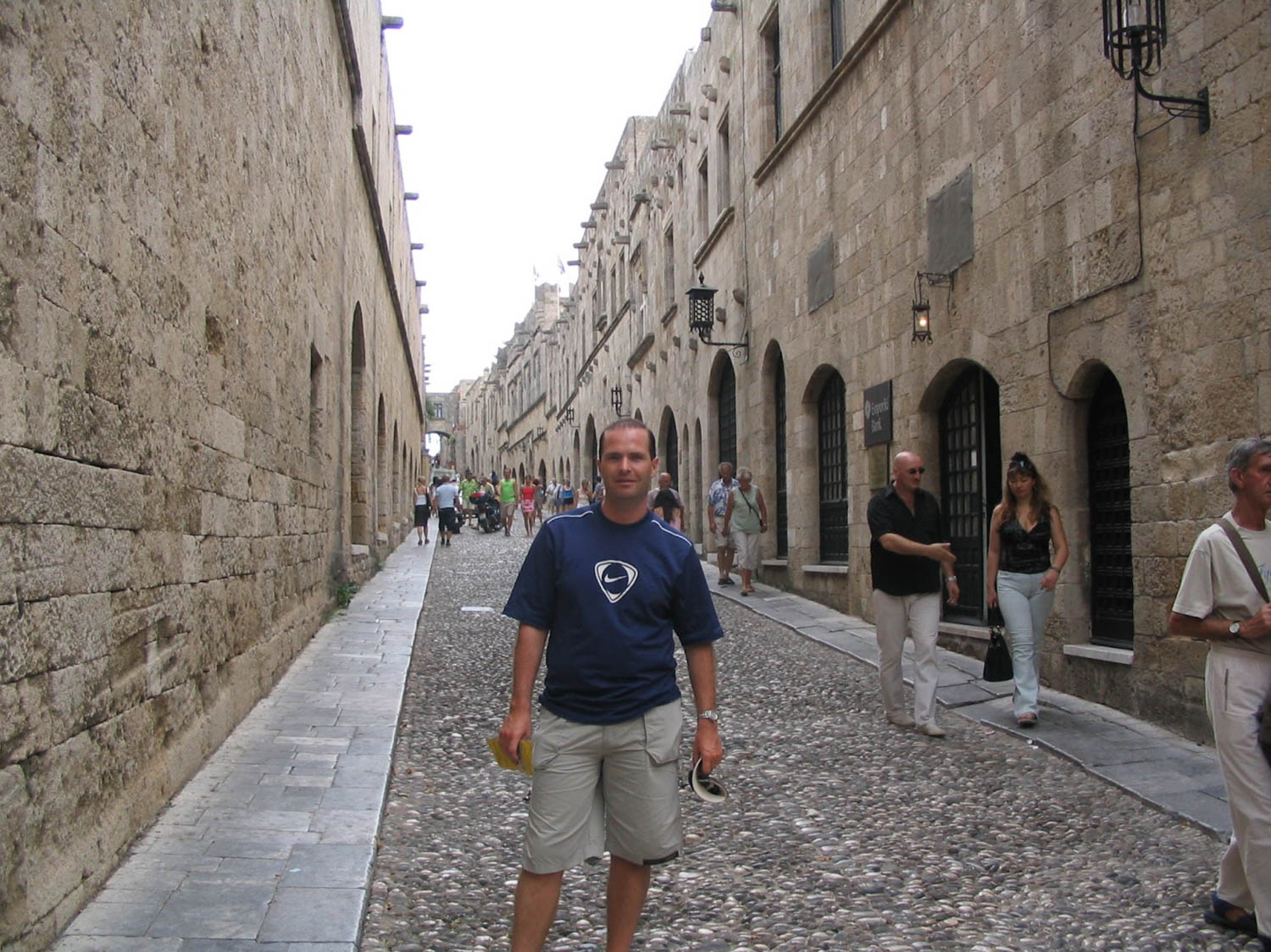
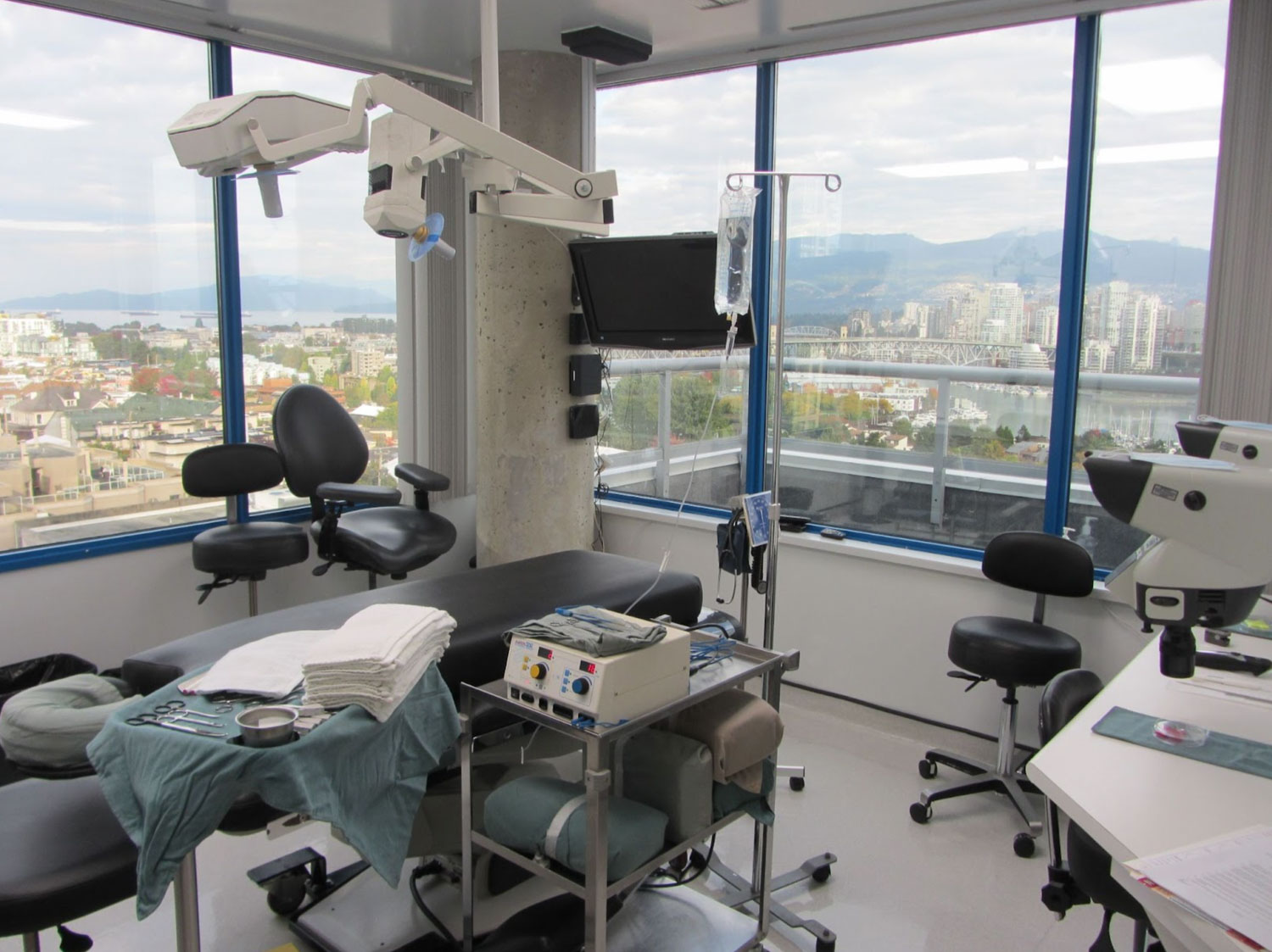
In late 2005, I discovered online forums and Joe Tillman’s Hair Transplant Mentor website, where patients openly documented both success and failure. For the first time, I saw honest discussion around repair work, donor management, and long-term planning and understood how early mistakes compound over time.
I learned that repair was possible, even with limited donor supply. After consultations and some sobering realities, I took out a loan and committed to repair with Hasson & Wong, knowing this was likely my last real chance.
The Repair That Changed Everything
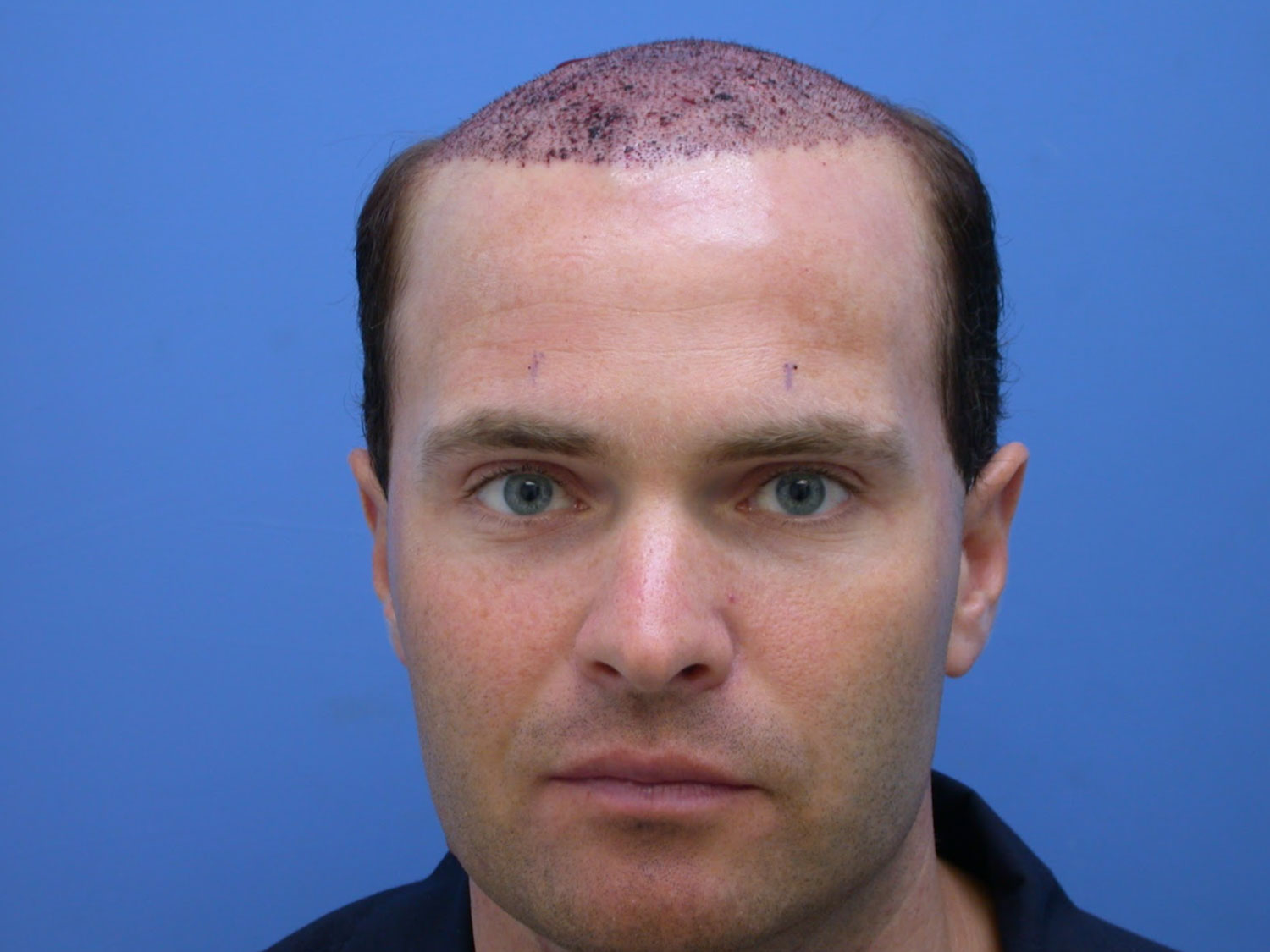
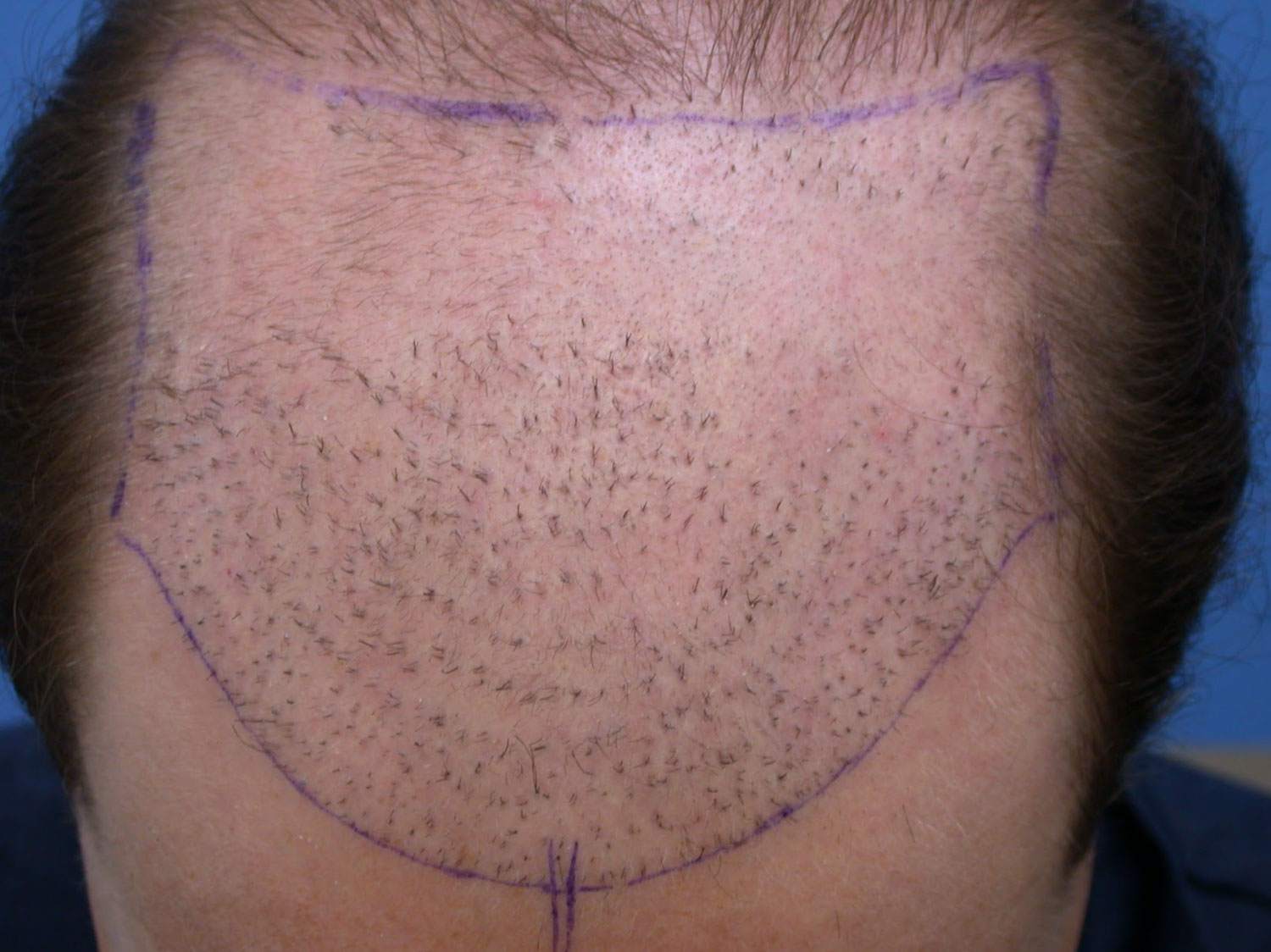
The repair surgery in 2006 involved nearly 5,000 grafts in a single day. It was long and intense, but for the first time everything was properly planned and honestly discussed - including the trade-offs around scarring and donor limitations. Restoring a natural appearance gave me something I’d lost for years: the ability to live normally again.
Recovery wasn’t easy. There was shock loss, wide scarring, and a prolonged ugly-duckling phase. I documented everything on the forums under the name 'Garageland', which became a form of therapy. By 12 months the result exceeded anything I’d imagined - confidence returned, and with it the desire to help others avoid the mistakes I’d made.



Becoming a patient advisor
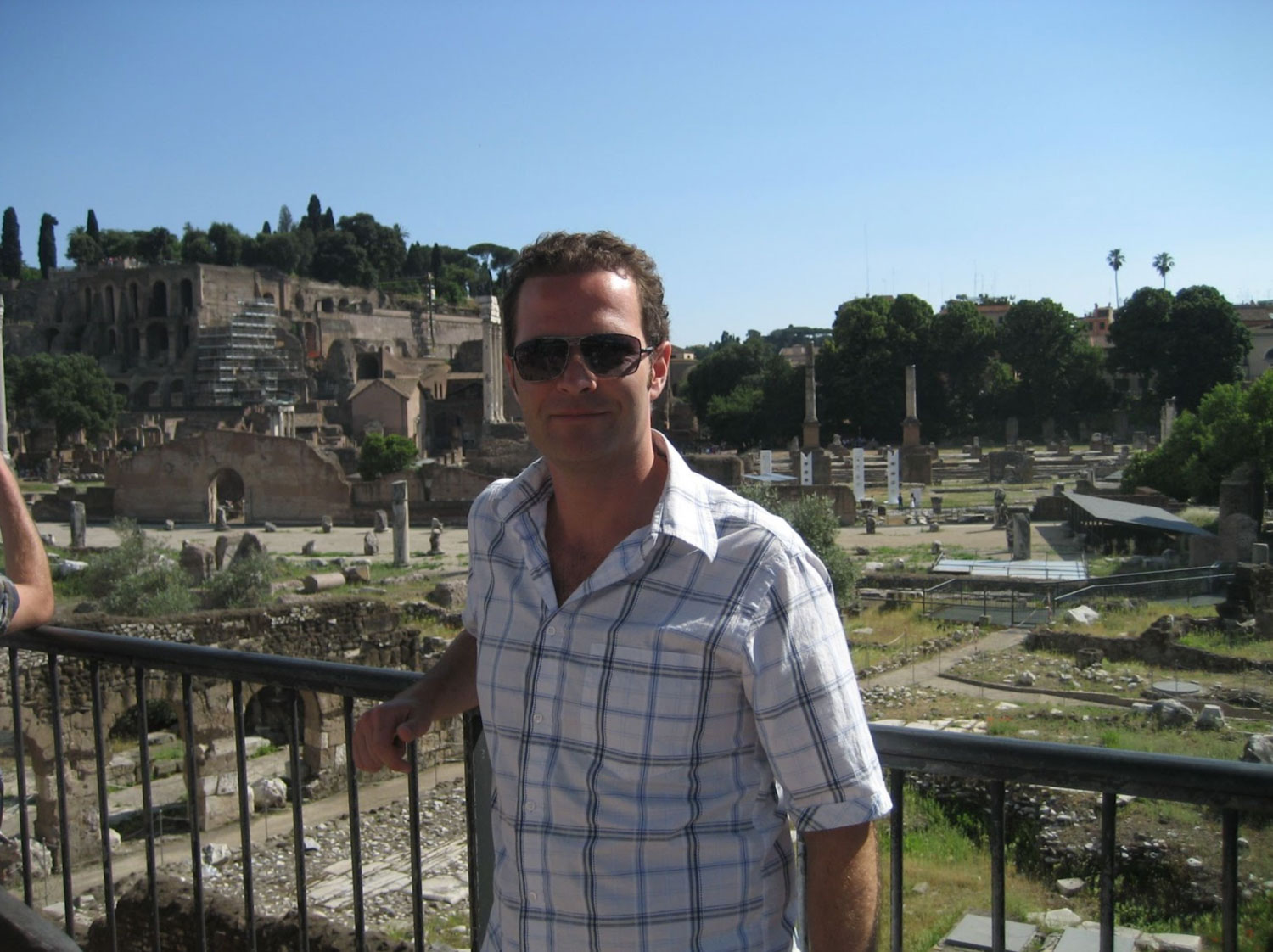
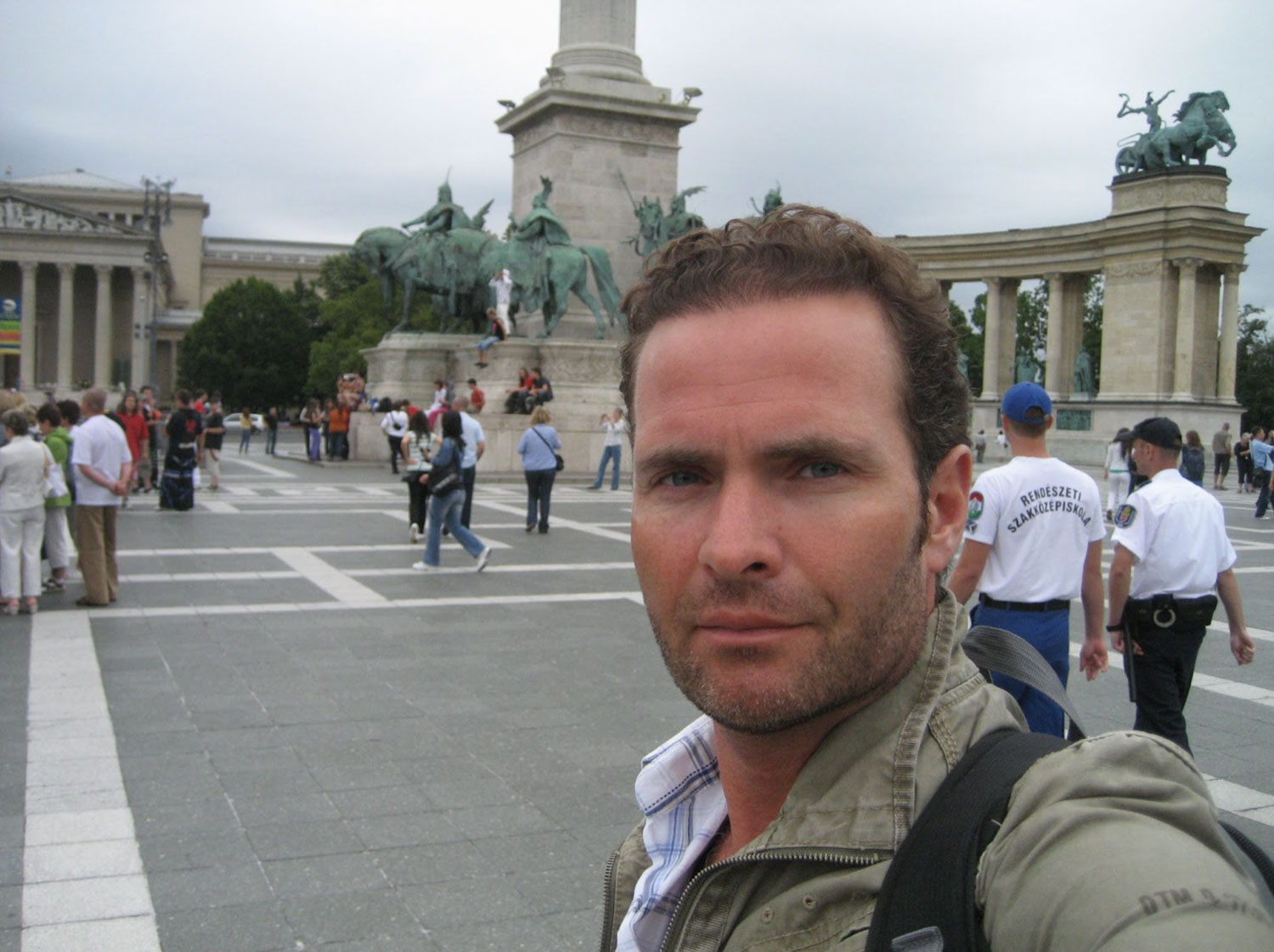
After travelling solo through Europe in 2009, I began formally helping patients. Hasson & Wong asked me to become a UK patient advisor, meeting people face-to-face and explaining the realities of surgery.
What started part-time became a calling. I realised lived experience mattered - especially in an industry where marketing often drowned out education.
Scar revision and final FUT
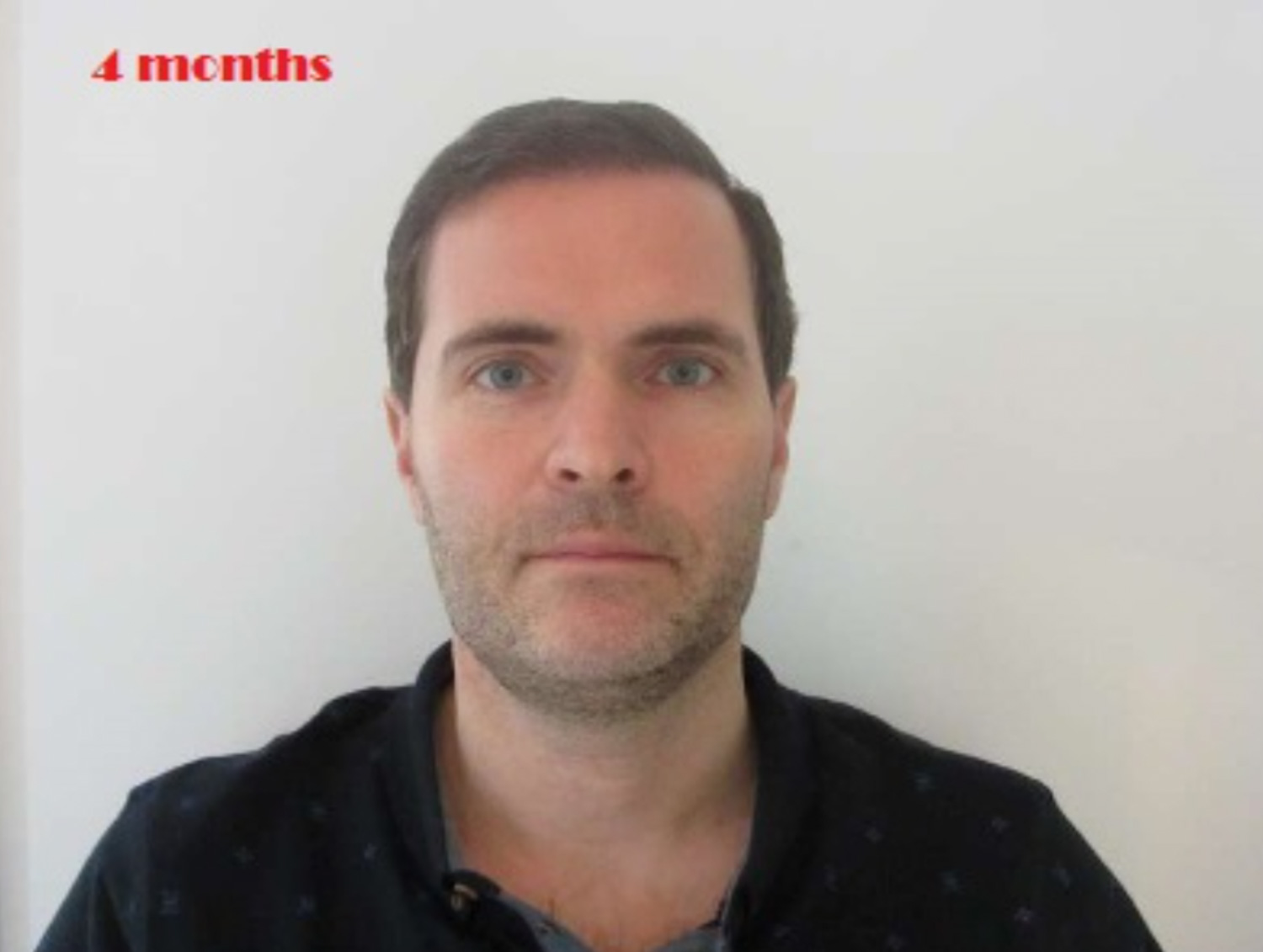
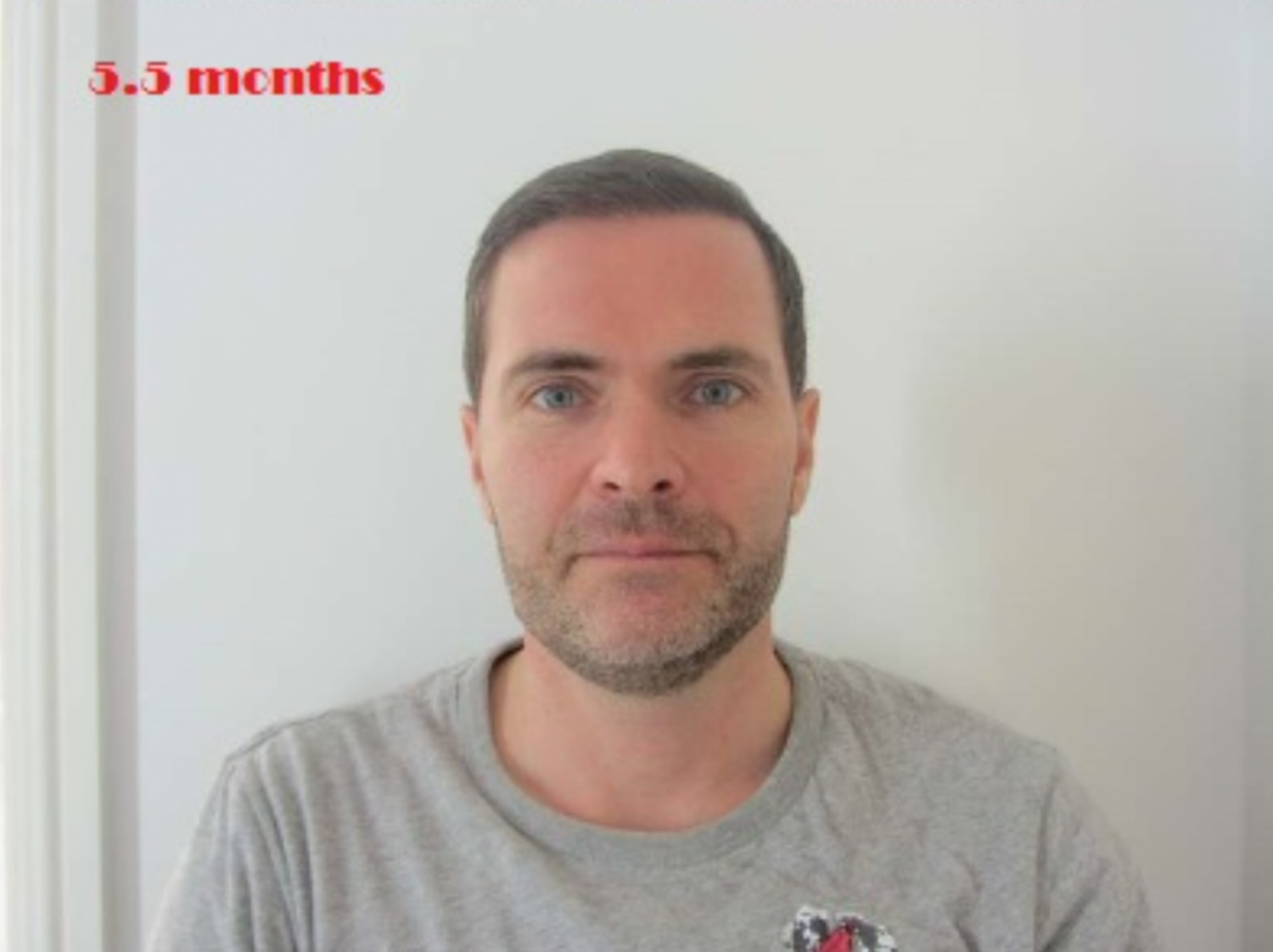
Scar revision in 2010 helped soften my hairline, though early damage could never be fully erased. In 2013 I underwent my final FUT - partly necessity, partly honesty-driven “hair greed.”
The result improved my frontal density significantly, but reinforced an important lesson: every decision has long-term consequences, especially when donor supply is limited.


Remarriage, fibres and reality
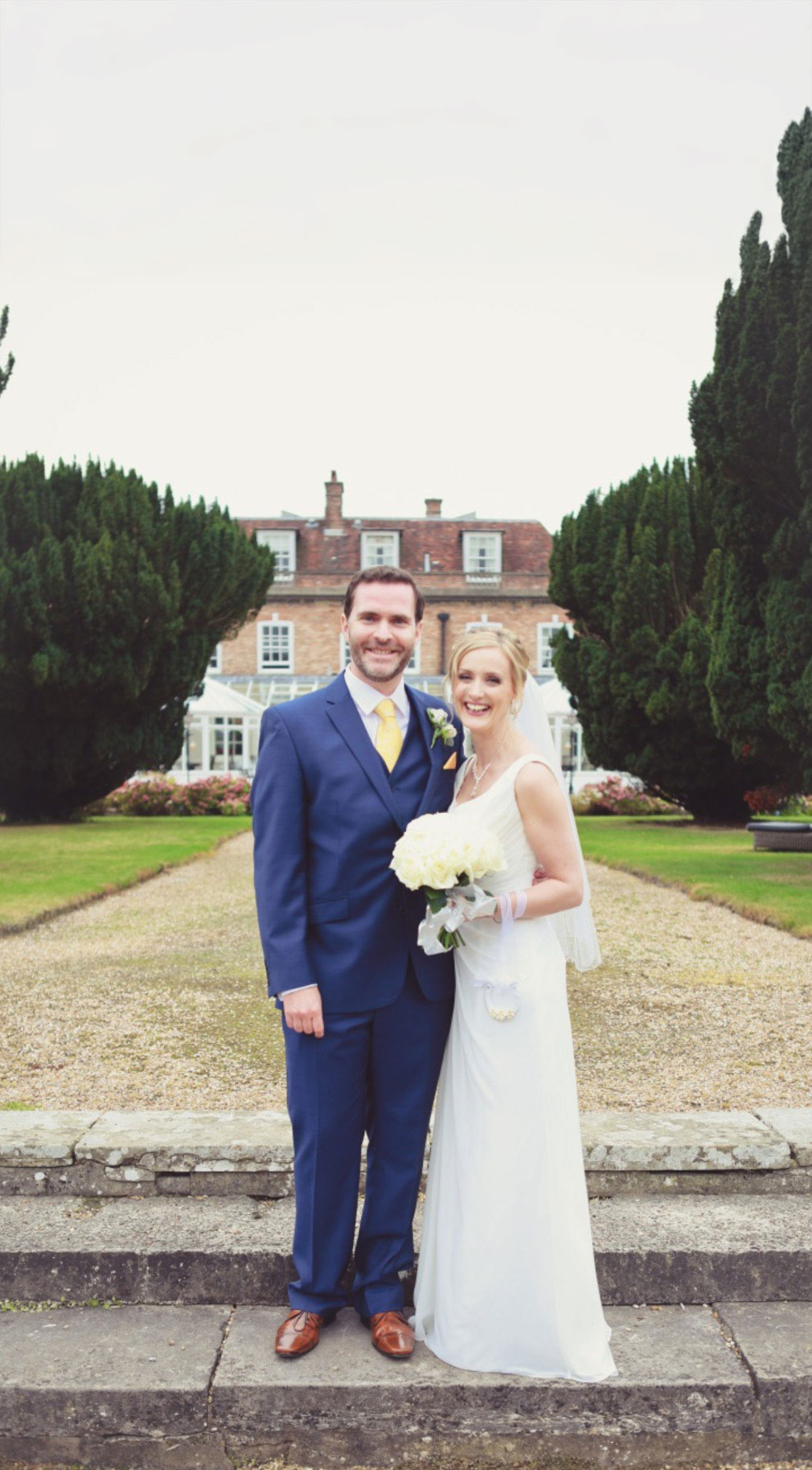
I remarried in 2014 (second time) - my wife Sarah, who I’m pleased to say I’m still happily married to.
Because my crown was still thin, I used Nanogen fibres to enhance the look on the day. Fibres helped me for years - especially during growth phases and on special occasions. Less is more. Subtle beats obvious.
FUE and beard grafts with Dr Edward Ball
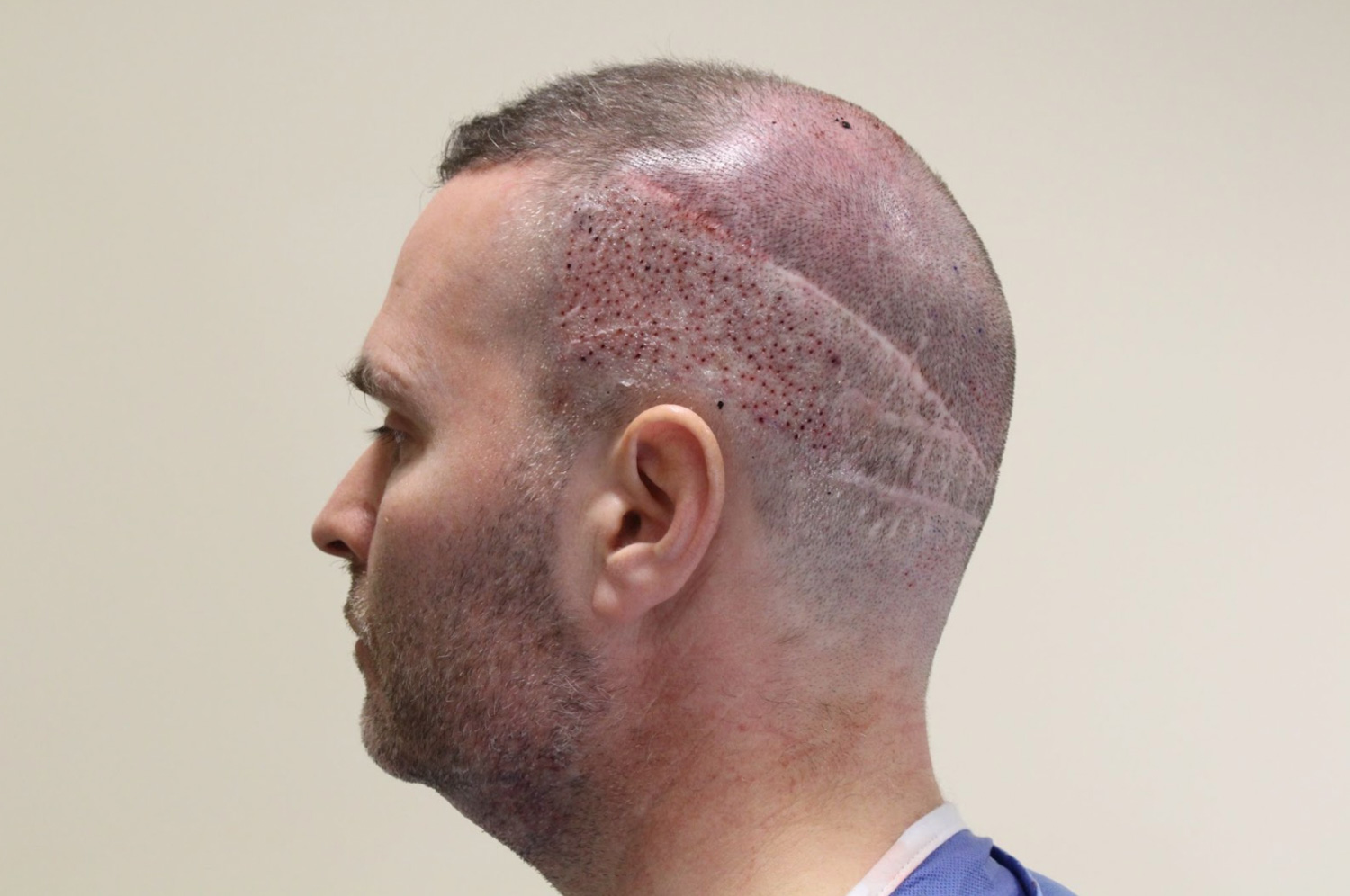
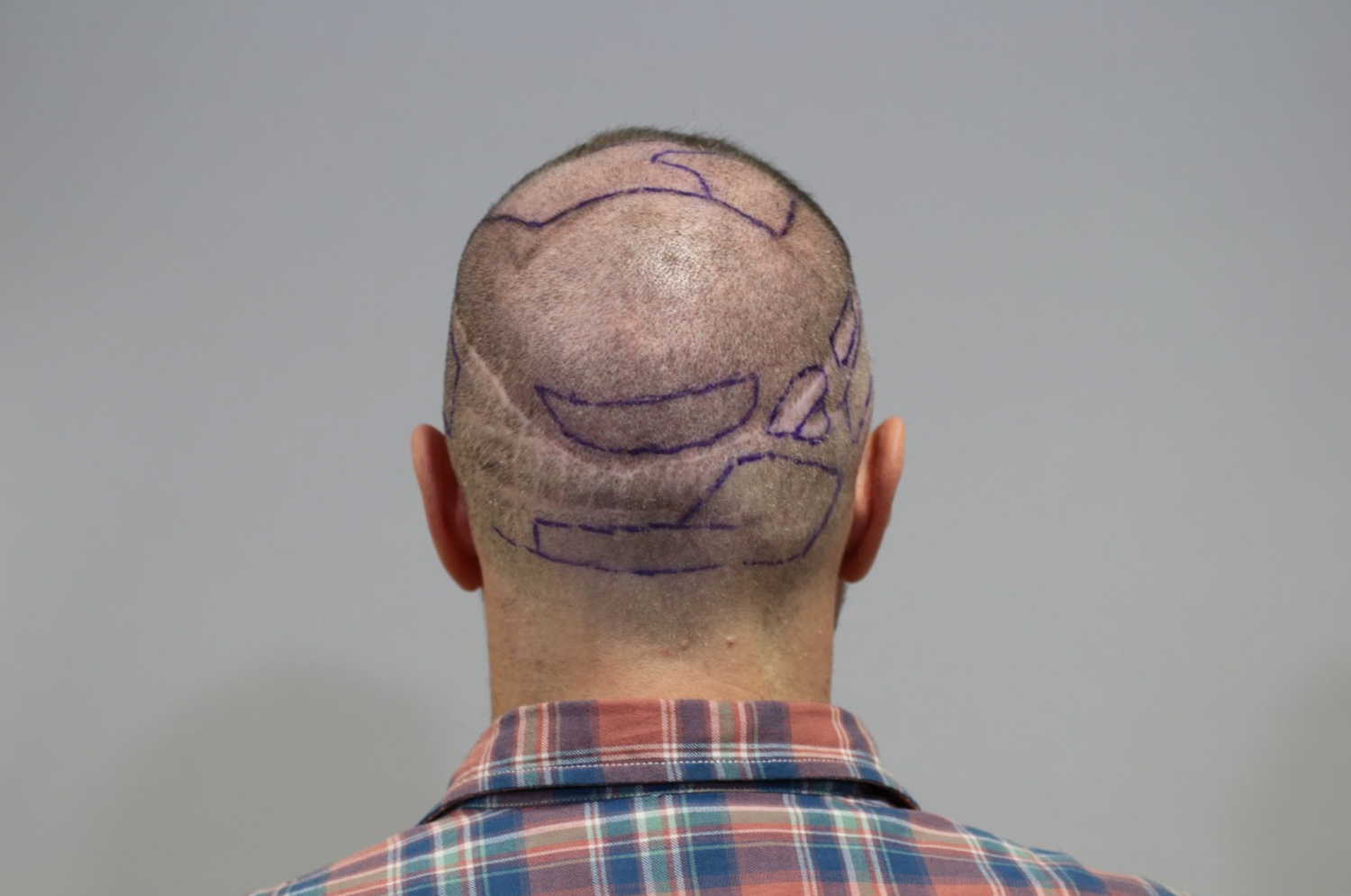
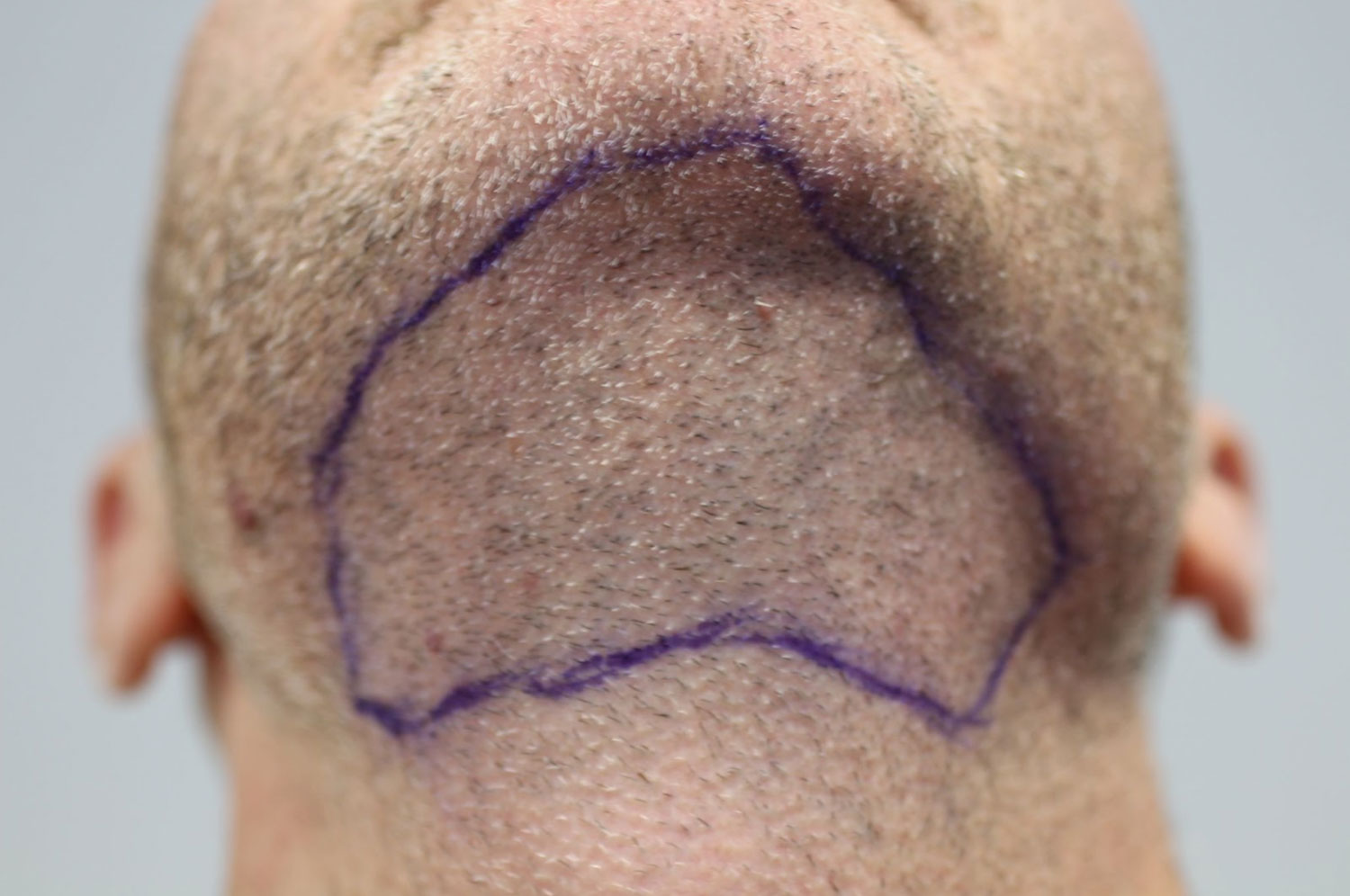
In 2017 I underwent my first FUE with Dr Edward Ball, including beard grafts - something I’d never experienced personally before.
Recovery was easier physically, but emotionally challenging. Seeing my scars fully exposed was confronting. Over time, the beard grafts blended well and expanded my understanding of modern repair options.

.avif)
Refining the repair and ageing the hairline
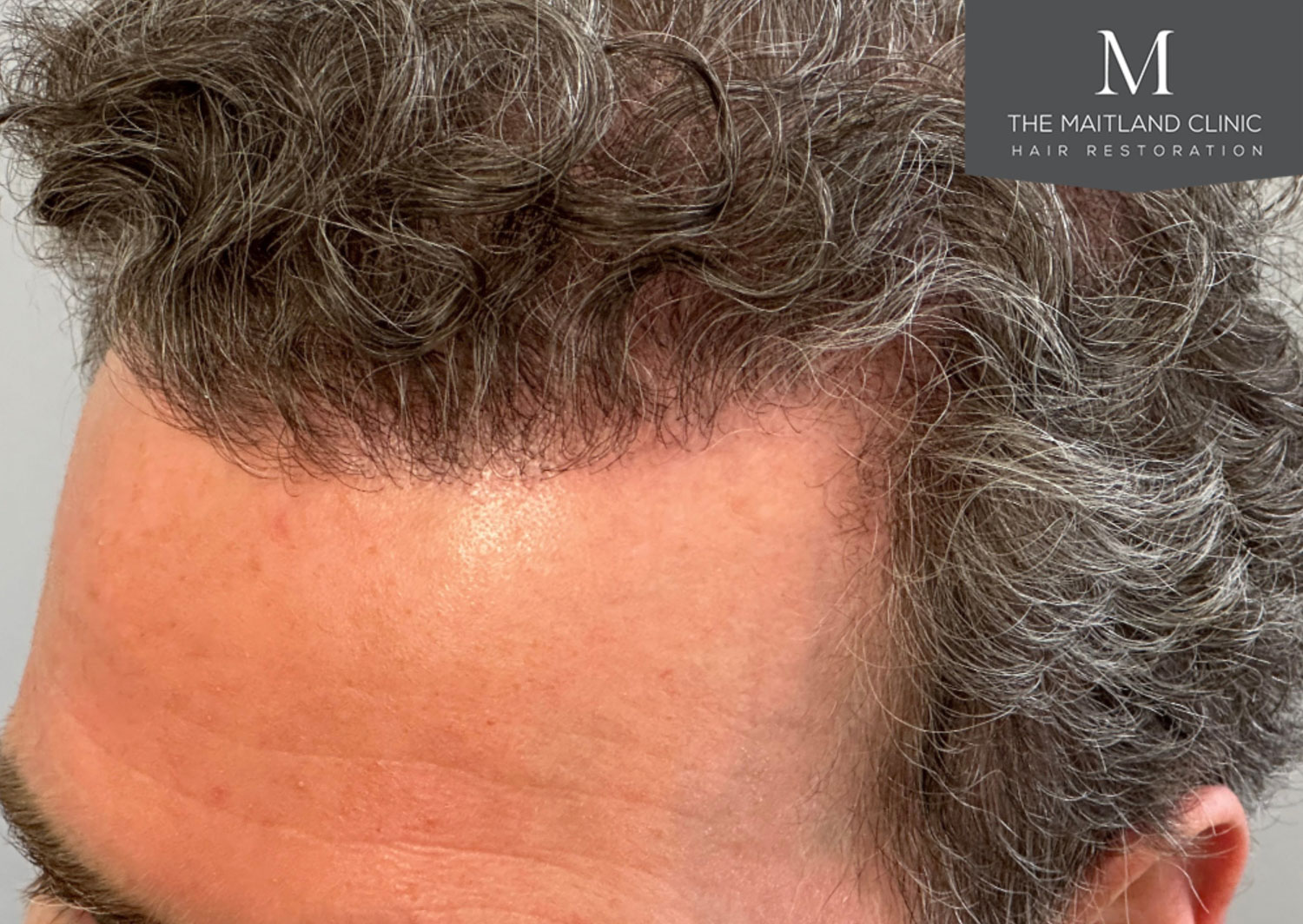
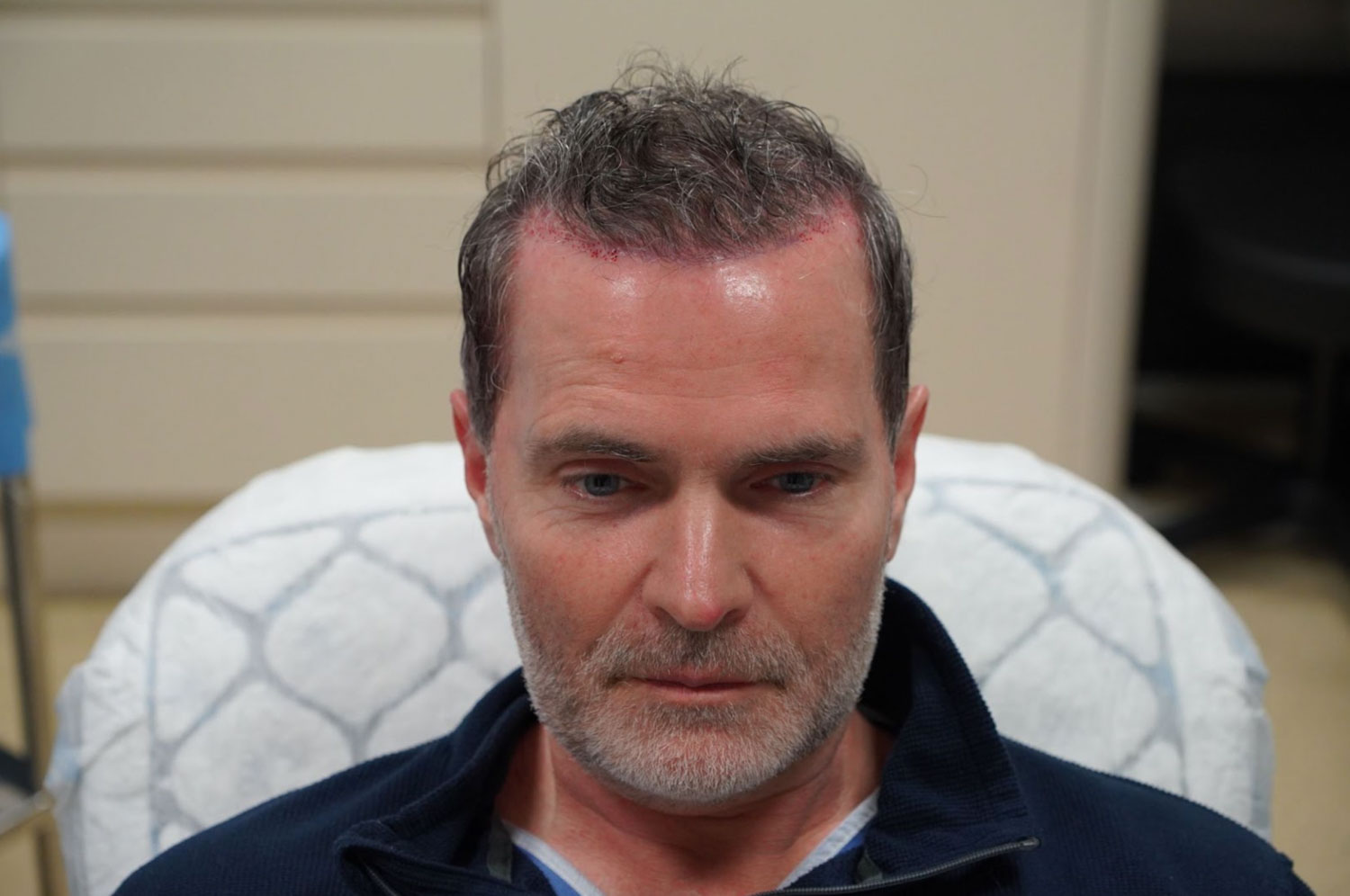
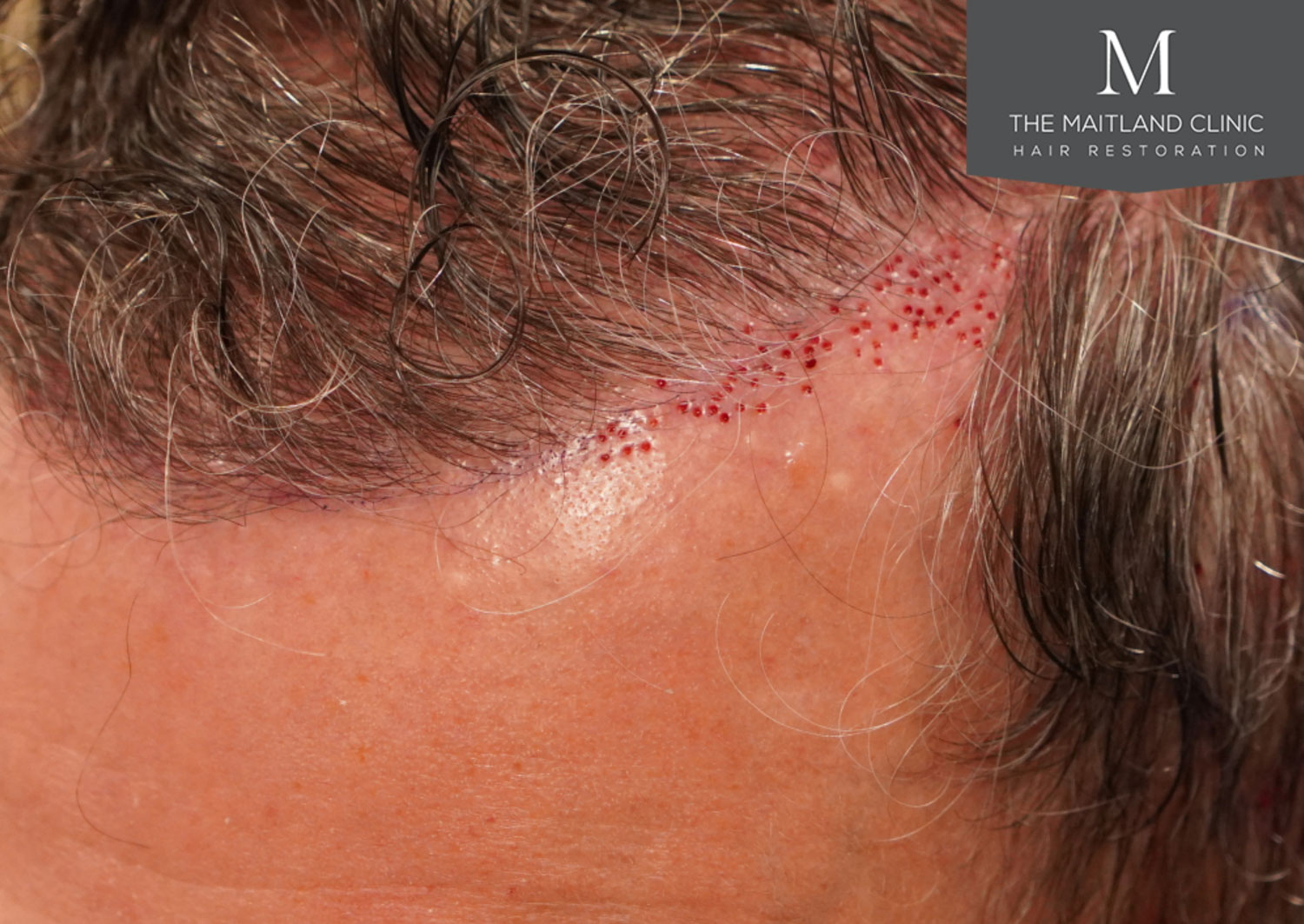
By 50, my hairline still looked good - but slightly too good for my age. I wanted subtle ageing and softer transitions.
A small, meticulous procedure achieved exactly that. Most people would never notice - but I did. And that mattered.
Medication: finasteride, minoxidil, and perspective
Finasteride has been part of my life for over 20 years. I’ve stopped it before and paid for it. Without it, I doubt my hair would look anything like it does today.
I later added oral minoxidil with good results, though I’ve seen serious side effects in others. Medication is powerful - and must be approached with respect, balance, and proper medical oversight.
Where I am now and why this website exists
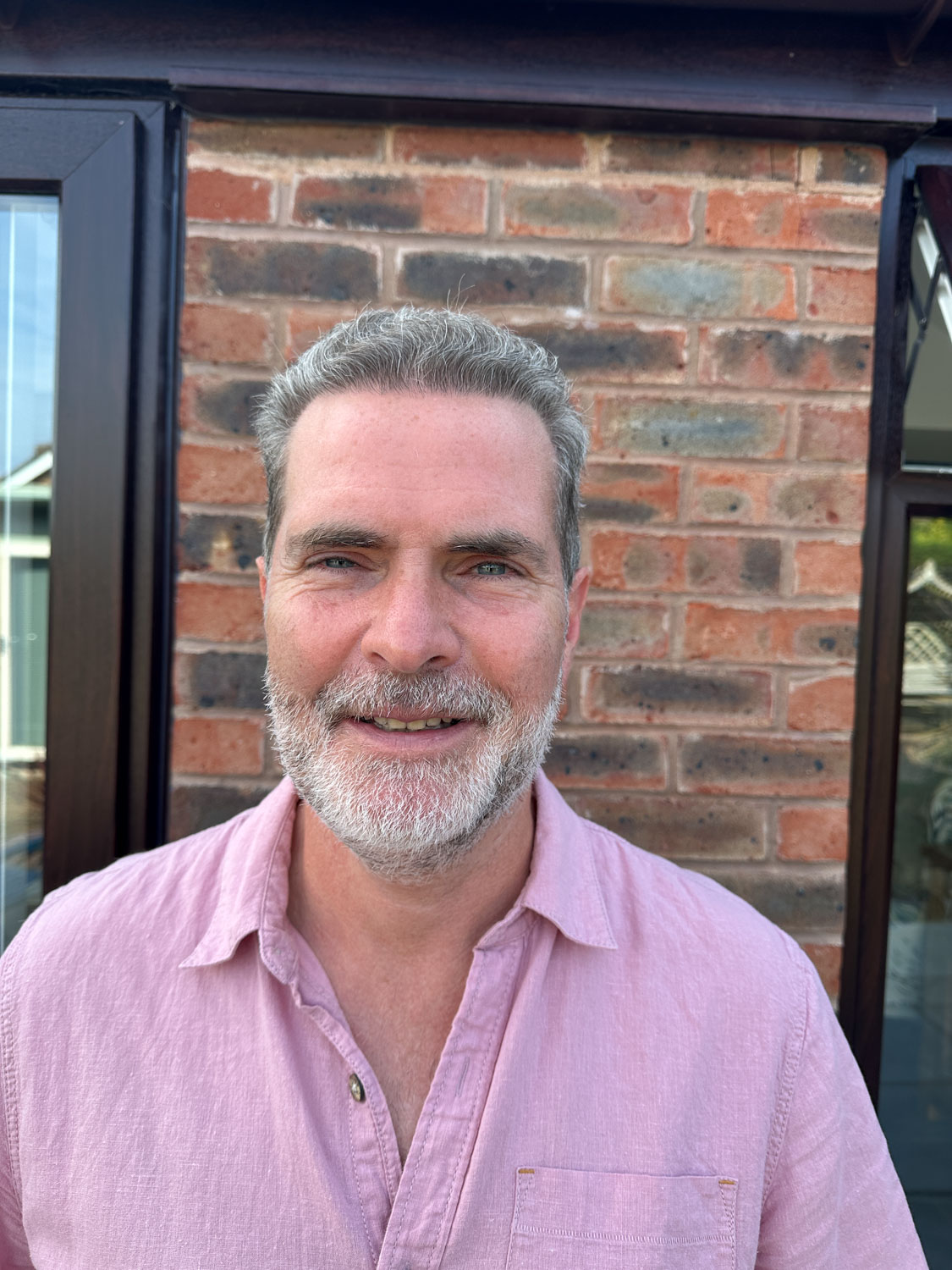
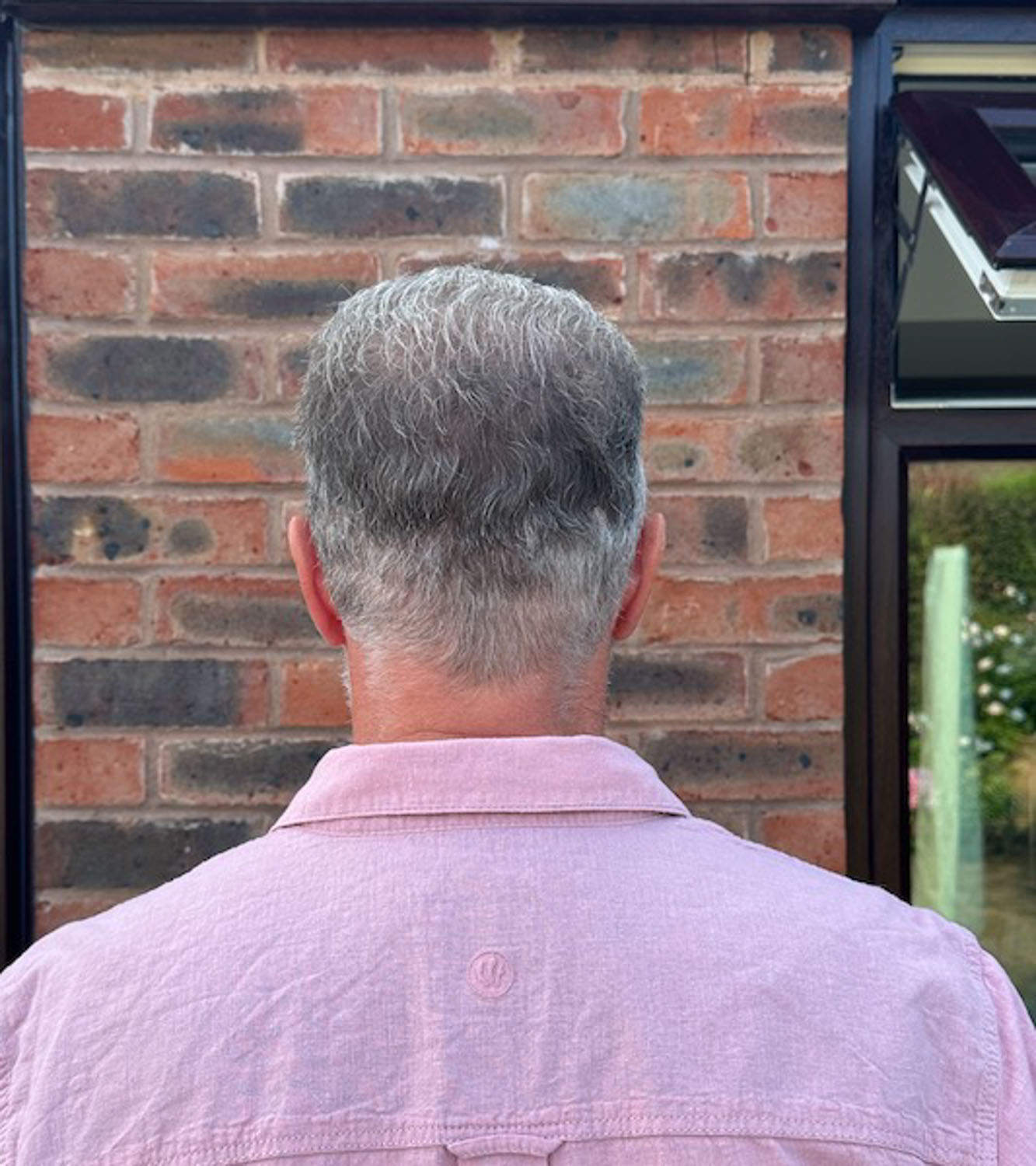
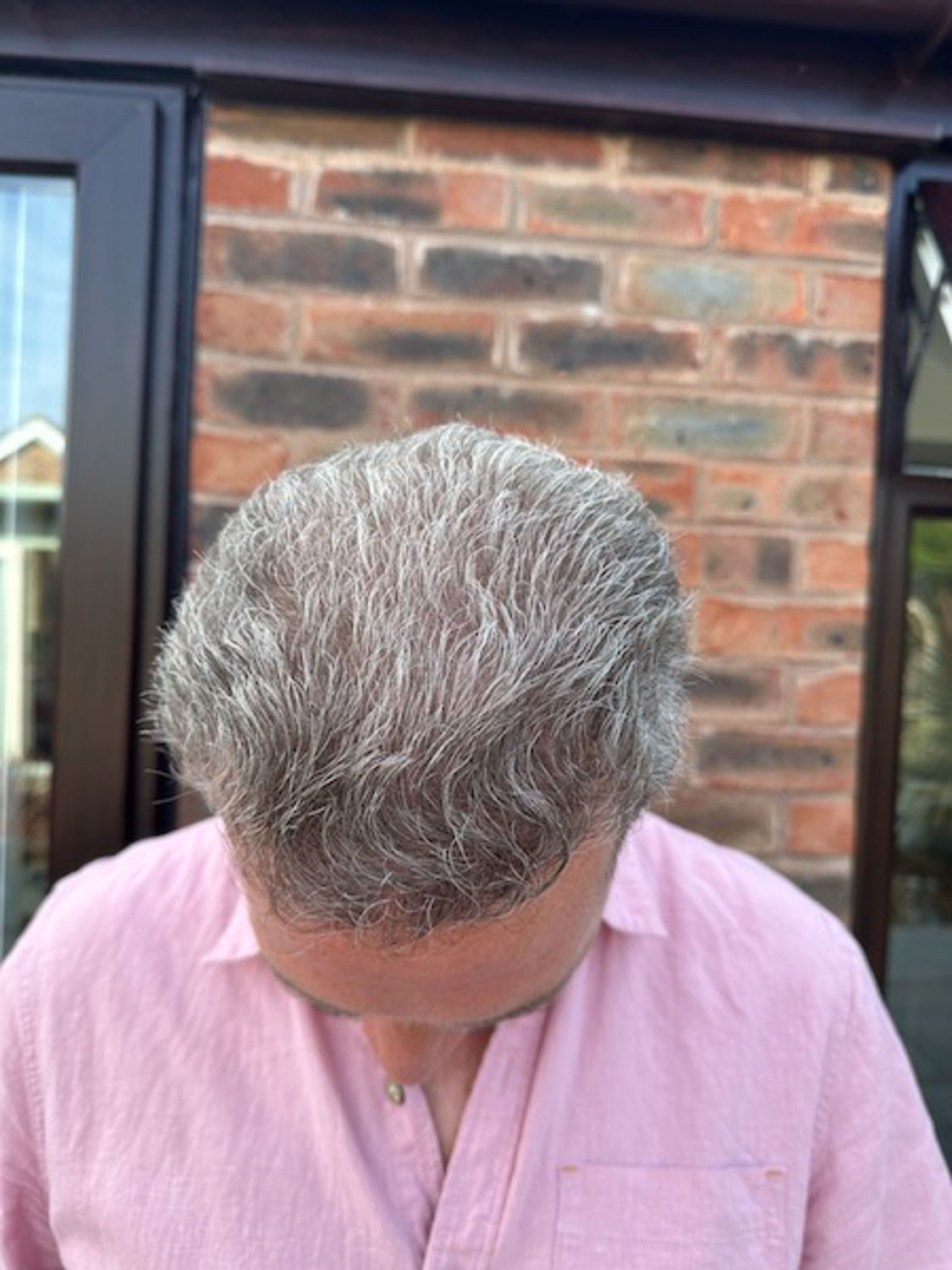
Today, I’m genuinely content with my hair and grateful for the surgeons and patients I’ve learned from along the way. After nearly a decade at The Maitland Clinic, I now work independently.
This website exists to offer what I wish I’d had: clear, honest guidance from someone who’s lived through 30 years of hair loss, eight surgeries, and both the best and worst of the industry. My goal is simple - to help others avoid expensive mistakes and unnecessary regret.